Analytics

Showing posts with label George Zinkhan. Show all posts

Sunday, July 22, 2012

Miscellany: 7/22/12

Quote of the Day   
The great pleasure in life is doing what people say you cannot do.
Walter Bagehot

Four Angels From the Aurora Movie Massacre


 Matt McQuinn and girlfriend Samantha Yowler.
Victim Matt McQuinn and Girlfriend Samantha Yowler
Courtesy Facebook HT NY Daily News
Chivalrous 27-year-old Matt McQuinn's last living moments were spent shielding 26-year-old girlfriend Samantha Yowler from the spray of a mass murderer's bullets. Samantha survived the incident with a leg wound.

 Jon Blunk and his girlfriend Jansen Young, whose life was saved when Blunk threw himself on top of her in the hail of gunfire at the Century 16 movie theater in Aurora, Colo.
Victim Jon Blunk and his girlfriend Jansen Young
Photo Courtesy Blunk family HT NY Daily News

Valiant Jon Blunt, 25, wanted to return to the Navy (after a 5-year stint, mostly serving in the Persian Gulf) with the goal of becoming a SEAL. He brought 21-year-old Jansen to the movie to celebrate her recent graduation at a veterinarian school. Jon threw Jansen under the seat and covered her body with his. He leaves behind two children from his estranged marriage: Hailey, 4, and Maximus, 2. He was supposed to see his children over the weekend. “My daughter can’t comprehend it, and keeps wanting to call him,” said his separated wife Chantel Blunk.

HERO22N_6 copy
Victim Alex Teves  and girlfriend, Amanda Lindgren
Photo Courtesy Facebook HT NY Daily News
Heroic 24-year-old Alex Teves managed to get Amanda on the floor but was shot before he could dive down himself.

 Colorado theater shooting victim Jessica Redfield / Jessica Ghawi
Jessica Redfield / Jessica Ghawi via Twitter HT NY Daily News
Jessica Ghawi, an aspiring sportscaster and beautiful native Texas redhead (like a handful of my grand-nieces), survived an earlier tragedy at a Toronto Eaton Center mall shooting last month. She had the following relevant words of wisdom in her blog to share about her mall experience:

I say all the time that
every moment we have to live our life
is a blessing.
So often I have found myself taking it for granted.
Every hug from a family member
Every laugh we share with friends.
Even the times of solitude
are all blessings.
Every second of every day is a gift.
After Saturday evening, I know I truly understand
how blessed I am 
for each second I am given.


Obama Says This, Others Say That

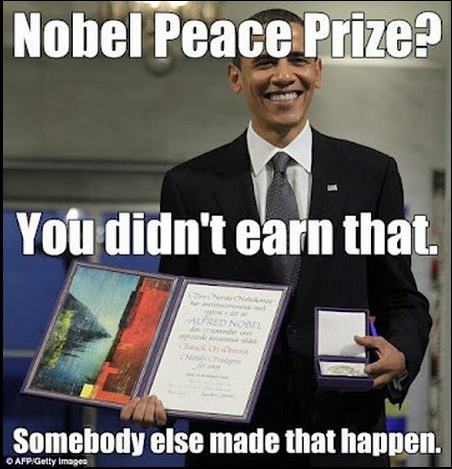
"If you’ve got a business — you didn’t build that. Somebody else [government] made that happen.”  - Barack Obama

From Ayn Rand, Atlas Shrugged (HT Carpe Diem)
“He didn’t invent iron ore and blast furnaces, did he?”
“Who?” 
“Rearden. He didn’t invent smelting and chemistry and air compression. He couldn’t have invented his Metal but for thousands and thousands of other people. His Metal! Why does he think it’s his? Why does he think it’s his invention? Everybody uses the work of everybody else. Nobody ever invents anything.” 
She said, puzzled, “But the iron ore and all those other things were there all the time. Why didn’t anybody else make that Metal, but Mr. Rearden did?” 
From FA Hayek, The Counter-Revolution of Science  (HT Cafe Hayek)
We flatter ourselves undeservedly if we represent human civilization as entirely the product of conscious reason or as the product of human design, or when we assume that it is necessarily in our power deliberately to re-create or to maintain what we have built without knowing what we are doing.  Though our civilization is the result of a cumulation of individual knowledge, it is not by the explicit or conscious combination of all this knowledge in any individual brain, but by its embodiment in symbols which we use without understanding them, in habits and institutions, tools and concepts, that man in society is constantly able to profit from a body of knowledge neither he nor any other man completely possesses.  Many of the greatest things that man has achieved are the result not of consciously directed thought, and still less the product of a deliberately coordinated effort of many individuals, but of a process in which the individual plays a part which he can never fully understand.  They are greater than any individual precisely because they result from the combination of knowledge more extensive than a single mind can master.
Removing Joe Paterno's Statue: A Critical Opinion

As a writer, I really can't predict how readers will respond to my work. I've written some high-quality essays in this blog which have attracted few, if any, pageviews. And then there have been unexpected hits. I did not get individual blog post statistics until I upgraded my blog design a few months back, so I don't have lifetime statistics on the posts, but my George Zinkhan post is still one of my most popular entries.

For those who are unfamiliar with MBA degree plans, students take a number of core classes in finance, organizational behavior, production and logistics management, accounting, etc., including marketing. Zinkhan, relatively new to the UH faculty, taught my marketing class. I believe that he was Dutch American and like many Dutch people very tall (6'3" according to one news account). Like many academics, he came across as well-mannered, disciplined, quiet, almost aloof. I did well in the class but as an MIS major didn't take additional marketing classes. The next and last time I saw him, I was a PhD student with a shared office on an upper floor at one end of McElhinney Hall; the marketing department office anchored the other end of the floor. Zinkhan and I crossed paths on a rare occasion in the hall one day, and he flagged me down  (I remember being impressed that he recognized me by name from a few semesters back). He told me (unknown to me) that he had submitted a copy of my class paper along with about 26 or so other projects, and some external authority had reviewed the papers and ranked mine the best. Zinkhan then hastily added that he thought so, too. To be honest, it made my day: it was an unexpected blessing.

I was visiting my folks in Texas; my maternal uncle was a diocesan priest in the Fall River area but preferred his milestone ordination anniversary to be a quiet, simple family affair with my mom, his only, younger sibling. I was staying at a local hotel and remember scanning the headlines, only to discover from national news alerts that my former marketing professor, now with the University of Georgia, was on the run and wanted as the chief suspect in a multiple homicide involving his wife and others. At first authorities thought that he would attempt to flee to Holland where I think he had relatives, but then they found his body a few days later, having attempted to disguise his suicide (Why? So law enforcement would spin their wheels trying to find him?)

I've never known someone whom has murdered another human being; it was a surreal feeling. Zinkhan didn't seem that much different from scores of academics I have met over the years. He had published over 100 peer-reviewed articles and served as an editor and  reviewer for major marketing journals; he served for several years as chairman of his department at the University of George and had held an endowed chair for years leading up to the tragedy.

The point is, after a horrific crime like Zinkhan's, and I want to ensure readers know I'm not whitewashing his crime, I hate the idea that's the only thing people will remember him for. He was a very good professor over almost 3 decades (to which, I'm sure, hundreds of students besides me will attest) and had a first-class mind. I understand why people are upset over the murder-suicide; nothing can ever justify or excuse what he did during those last few days of his life. He destroyed his hard-earned legacy of decades as a distinguished scholar and teacher. As I wrote the above, I read a relevant webpage (freerepublic.com) and saw virulent attacks by people whom never met the man.

(For those unfamiliar with the story, Zinkhan apparently had a secret recording of his wife's affair with one of the two other murder victims, Tom Tanner. He was planning a divorce but hoped to reconcile with his wife, lawyer Marie Bruce. Zinkhan drove in a car with his 10-year-old daughter and 8-year-old son, confronting Bruce and Tanner at a theater reunion picnic, resulting in an angry argument between Zinkhan and his wife. Zinkhan reportedly then returned to his vehicle for a pair of handguns. Tanner was the first victim; Teague became a victim while trying to calm the situation. Zinkhan left the scene, dropped off his children and then fled the area.)

Other examples come to mind. As familiar readers know, I enjoy the spectacle of scripted pro wrestling. Chris Benoit, at an average 5'9", was an unlikely competitor in a sport where big men up to a foot or more taller and over 100 or more pounds heavier dominate. Other than the obvious David vs. Goliath storyline, it's simply not credible than an average-sized man can compete at the same level without diminishing the bigger characters. What Benoit lacked in size, he made up with technical wrestling expertise, agility and high-flying maneuvers. Then in June 2007 over a weekend with a Sunday PPV where ironically he had been booked to win a now defunct championship title, Benoit killed his wife and their young son, whom many suspect had Fragile X syndrome, before hanging himself in the proximity of a weight machine. When WWE chairman Vince McMahon, Benoit's  boss, learned of the murder-suicide, he immediately distanced himself and WWE from Benoit, and 5 years later, I don't think I've seen or heard a single reference to Benoit on any broadcast. Again, I understand the nature of Benoit's unforgivable crimes, but it doesn't change the fact that for several years, he was an entertaining, skilled wrestler, one of the best I've ever seen.

Pete Rose remains one of the greatest MLB players of all time, the all-time hits leader, but to this day, MLB has banned Rose from its prestigious Hall of Fame. Rose was a manager at the time and had a gambling problem. From my understanding, the gambling did not involve betting against his own team in which one would have an obvious conflict of interest. Now I don't approve of gambling, but to what extent does a Hall of Fame maintain its integrity by pretending his entire stellar playing career before the gambling problem never existed? What if a current Hall of Famer got accused of domestic violence or worse? Would the Hall expunge his election, pretend it didn't happen? Everyone knows if Pete's gambling problem hadn't surfaced before his eligibility for election, he would be in the Hall. I understand MLB's sensitivity to the gambling problem in the aftermath of the Black Sox scandal, but there are ways to sanction Rose without denying an honor he earned.

So let's get to the topic of Penn State's legendary late football coach, Joe Paterno. A prominent statue of Joe Paterno was removed from the proximity of the stadium over the weekend (see video below), and the NCAA is set to issue strong sanctions, short of a football program "death penalty" on Monday, in the aftermath of the trial and conviction of former assistant coach Sandusky on dozens of sexual abuse charges.

Let me be very clear: this blog has not been favorably disposed towards Jerry Sandusky; I heard enough during Bob Costas' remarkable interview with him that I would never leave the former coach alone with my kids (if I had any). [I find it remarkable that Sandusky's lawyer let him do the interview.] Still, I was uncomfortable by how many people (including Sandusky's own adopted son) were coming out of the woodwork as soon as it was clear that Sandusky was in serious legal jeopardy, and political correctness was running amok: everybody or everything associated with Jerry Sandusky, especially Penn State and head coach Joe Paterno.

Joe Paterno was in his 80's; I suspected that his main motivation for continuing with coaching as he had was an ambition to set the all-time win record for college football coaches. And there is no doubt that exposure of questionable Sandusky allegations would been scandalous.

The connection is somewhat tenuous. There was an allegation that Sandusky showered with a boy at a Penn State facility in 1998. The district attorney declines to press charges, but word gets back to Paterno, whom tells Sandusky that he'll never succeed him at Penn State.  Sandusky retired in 1999 but with emeritus status, giving him access to Penn State facilities on an ongoing basis; the university dismisses speculation that Sandusky's retirement was related to the 1998 allegation. [I certainly don't understand how or why Sandusky was allowed continued access to facilities given the nature of the allegation.] A temp janitor Jim Calhoun reportedly observed Sandusky performing oral sex on a boy in 2000. It's not clear that the complaint goes beyond Calhoun's supervisor; there are concerns by the janitors about political reprisals if they came forward.  Then in 2002 we have the infamous event of McQueary whom reportedly catches Sandusky engaging in anal intercourse with a boy. McQueary reports to Paterno, whom contacts the athletic director Curley whom in term contacts the VP of Finance Schultz (to whom campus police report). Curley reportedly interviewed Sandusky, whom denied any wrongdoing. Neither Schultz nor Curley allegedly report the allegations to authorities, and McQueary himself never does.

From where I'm sitting, Paterno (1) effectively told Sandusky to retire after the 1998 allegation,  (2) escalated the 2002 issue to the athletic director, and (3) was not a target of the prosecution. Even after the scandal breaks near the end of the football season, Paterno proposes a face-saving retirement at the end of the football season. Not good enough for the university which summarily throws a legendary coach under the bus and terminates him.

Even though I think it was imprudent for the university to grant Sandusky access to Penn State facilities after he retired, it is clear that the 2000 and 2002 incidents occurred without knowledge or consent of Penn State administrators or Paterno. I think Calhoun and McQueary, who claim to have observed crimes, should have gone to authorities, although it's not clear whether they knew the identities of the victims, especially if Sandusky chose to deny the incidents ever happened.

Could Paterno have done better under the circumstances? Yes. No doubt he was aware that the Sandusky allegations were scandalous and could taint his own legacy simply because they occurred on his watch. But I think this political grandstanding by Penn State at Paterno's expense is overdone and petty.


Political Humor

Inspired by Obama's famous Roanoke speech gaffe:

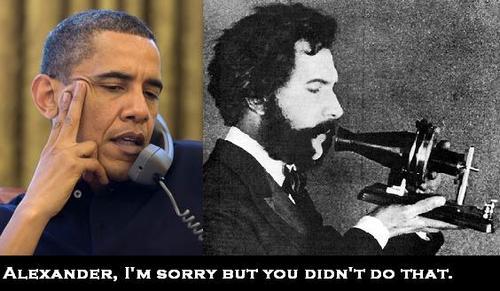
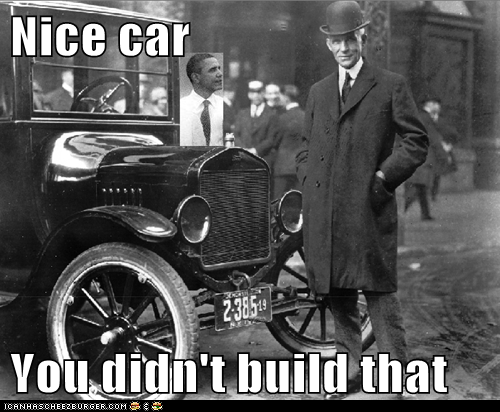
Some favorites from http://didntbuildthat.com/
Boom! From big Jon Lovitz.
Courtesy AFP Getty Images / HT didntbuildthat.com

From Mark.
HT didntbuildthat.com

Hey Mr. Edison, don’t get such a big head. It’s almost as big as that light bulb. Which you didn’t build. Somebody else made that happen.
The great Tom Edison    HT didntbuildthat.com

Henry Ford, you think you’re so smart. You didn’t build that. Somebody else made that happen.
Barack Obama: You didn't save THAT(Ford Motor Company)
HT didntbuildthat.com
Musical Interlude: My Favorite Groups

The Baby's, "Head First"

Wednesday, July 28, 2010

Miscellany: 7/28/10


Quote of the Day
No pleasure philosophy, 
no sensuality, 
no place nor power, 
no material success 
can for a moment give such inner satisfaction 
as the sense of living 
for good purposes, 
for maintenance of integrity, 
for the preservation of self-approval.
Minot Simons


Looking at My Pageviews...

Blogger has recently introduced a new Stats feature which allows cross-tabbing of pageviews. Over the past 3 months, about two-thirds of my readers are fellow Americans. What I find particularly intriguing is that roughly half of my international pageviews come from Denmark; of the remainder, the UK, Luxembourg, South Korea, and my ancestral homeland, Canada are the most frequent. I will say that that I have been a huge mark for the EU's taking a more fiscally responsible course than the Obama Administration. I've always been strongly pro-immigrant and am appalled by what I see as an Anglophobic response to the Deepwater Horizon  tragedy. For some reason, last Saturday's post has gotten the most recent views.

Probably the most notable post was the one I wrote about my former UH MBA marketing professor, George Zinkhan, whom had subsequently gone to the University of Georgia and made national headlines over a murder/suicide a year ago last April; someone in Australia excerpted part of my post on his website, and a reporter from Athens, GA (home of the University of Georgia) left me a voice mail. (I declined returning the call because I had not been in contact with him since I earned my doctorate.)

I personally think this is a very unique blog, and I expect that most readers will disagree with me on many issues. I use a lot of American idioms and plays on words, and I think I've got a good sense of humor (there are some inspired sarcasm and ad libs, and I also poke fun at myself).  But to all readers (even those who find themselves on my blog by accident), thank you for your time, and I look forward to your next visit.

The Arizona Immigration Law: 
Judge Susan Bolton's Mixed Bag Ruling

I've made my position on the immigration kerfuffle clear: first, I believe we should treat all visitors to the country with dignity and respect; second, I want a fully functioning, robust temporary worker program; third, all visitors must respect our laws; fourth, the Obama Administration is disingenuously rationalizing its arbitrarily, politically motivated immigration enforcement; fifth, I do not think it's constitutional or good public policy for Arizona to essentially subsidize federal enforcement. That's intrinsically morally hazardous. What's to keep the Obama Administration from, say, refusing to accept illegal aliens from Arizona and force the state to pay for them? Big difference: the Obama Administration prints money; Arizona can't. The Obama Administration can force Arizona into debt by abusing its managerial prerogative.

Ultimately, we need to take care of the Obama problem in 2012. There is reason to believe that Obama's abuse of power is grounds for impeachment, but until something like another terrorist attack on the homeland (God forbid) happens, which can be traced back to the Obama Administration's ambivalent immigration enforcement activities, we won't get any movement by Democrats. On the other hand, if Obama, who got lucky (thank God) on the Christmas and Times Square bombers, assumes that  luck is a sustainable policy and we get hit, I expect every Congressional Democrat will throw Obama under the bus.

Judge Susan Bolton's injunction against core features of the legislation, indicating the burden of the law will fall on the backs of legal residents, is unconvincing and will ultimately be thrown out by the US Supreme Court. For example, driving is a privilege. It requires a valid license. A valid license requires documentation. Visitors, whether in Arizona or a different state, have to comply. I'm fuzzy on how the new Arizona law differs in a substantive matter. If a state police officer arrested an illegal before today versus tomorrow, how does ICE distinguish the arrests other than arbitrarily?

On the other hand, I'm pleased to see the judge left intact state crackdowns on local sanctuary cities. My fellow conservatives would be well served to back off: they aren't strong enough in Congress, Obama and company are moving against popular opinion, not a winning long-term strategy, and angry attacks against illegal aliens will turn off Latinos. Take what you've been given (including the sanctuaries)  and appeal to the Supreme Court.

Schwarzenegger (R-CA) Renews Furloughs (Again) 
During Budget Impasse: Thumbs Up

Roughly 150,000 to 200,000 state employees will be required to take 3 unpaid days a month until California has a new budget. This iteration has a smaller pool of workers, mostly because 6 small unions have agreed to a 15% pay cut. Whereas Schwarzenegger has departed from Republicans on many public policy issues (gay marriage, the environment,  the stimulus bill, etc.), he has done the best he can given the current legislature to be a fiscal conservative.

Political Cartoon

IBD cartoonist Michael Ramirez notes that the real problem he's facing, with sharply lower approval numbers,  is underexposure to the American people and housewives in particular. I mean, how can Obama fail to follow up after other celebrities like Snooki have guested on the show? What are the chances he won't get a question about Ms. Sherrod? It's not like there are other things going on closer to DC where he might have made an appearance--like the national Scout Jamboree...


Musical Interlude: Chart Hits of 2008

David Cook, "The Time of My Life"


Madonna/Justin Timberlake, "4 Minutes"


Daughtry, "Feels Like Tonight"


Trace Adkins, "You're Gonna Miss This"

Sunday, April 26, 2009

Dr. George Zinkhan: A Former Student's Shock

In my recent "Need for Educational Choice" post*, I briefly mentioned that my MBA marketing administration professor had submitted a number of papers written in his course sections to some independent judge, and the latter had chosen my paper, describing the commercial failure of a computer application called CASHFAST, as the best of the group. Dr. George Zinkhan had stopped me in the hall to tell me the news (I was at the time now a PhD student with a shared office on the opposite end of the same floor as the marketing department); he quickly added he thought the same.

I had no idea when I went to ABC News' website to check out an alert that a University of Georgia professor was being pursued as a suspect in a multiple-murder case including his estranged wife, I would find the name of George Zinkhan and a photo of his familiar face. I hope to God that the rumors are not true, but there are enough circumstantial details that lead one to suspect it is true.

In my experience, George Zinkhan, as a professor, was very good and professional. I would never have expected these allegations; it doesn't fit with what I remember of the man. Yet something very wrong happened in Georgia, and nobody is above the law. I pray for the victims of this crime and tragedy and the children whom have lost their mother--and possibly the presence of their father in their lives. If and when Dr. Zinkhan is apprehended, I hope that he will be extended his full Constitutional rights, including that of a fair trial.

[7/28/12, further edits 8/18/12]. Corrections and follow-up: I originally referenced my academic retrospective Christmas Eve post; it was actually in a subsequent post, "Need for Educational Choice for Inner City Schools", when I first discussed Dr. Zinkhan. Second error: I identified victim murder Marie Bruce as Zinkhan's ex-wife (based on mistaken news accounts, e.g., click here); in fact, Zinkhan did have an ex-wife and children (from his first marriage) in Texas. Zinkhan was in the process of divorcing Marie Bruce but hoped for a reconciliation. Zinkhan's body was found a few days later a few miles away after the murders; he had shot himself in a covered self-dug grave. I do a follow-up on the Zinkhan story in my 7/22/12 post.
Courtesy AP

Monday, January 12, 2009

Need for Educational Choice for Inner City Schools

My own scholastic performance turned around in sixth grade primarily because of two incidents.

First, I found myself at the bottom of the posted top 10 list in my homeroom. I was intrigued and of course immediately set up an obvious goal--to reach the top of the list by the end of the school year. Easier said than done, because the perennial top student, a guy named Carson, was very bright and took pride in his leadership position. But with all the brashness that is youth, I told Carson I was gunning for the top spot. I was absolutely convinced I could do it, and by the end of school I achieved my goal. Carson gamely tried to save face by focusing on his consistently high performance, but he knew I had called my shot. It's not so much the question of competition per se. It had more to my own goalsetting, confidence and self-discipline.

Second, I had an English class taught by Mrs. Montgomery; she taught an unusually rigorous and challenging course on grammar and other subjects, beyond the typical material presented to junior high kids. I was inspired by the fact that she didn't spoon-feed the class but had confidence in our ability to learn more advanced material. I have always thought that it's better to expect more from a student, which conveys respect, than to underestimate a student's ability to learn.

I do realize that setting up a student for failure by setting unrealistic behavioral objectives is counterproductive. I once had to deal with a project lead named by my boss for a critical self-service expenses software implementation under an aggressive short-term deadline.  The project lead had no previous exposure to Oracle's ERP software. In effect, I was the de facto project lead having to mentor his protege he had recruited from his former employer. Steve responded to my complaint, saying that he believed in developing people by pushing them into the deep end of the pool (i.e., over their heads). My response was that it's easier to push someone into the pool knowing that a lifeguard is standing by to save her. Under different circumstances--a basic exposure to the Oracle Apps, a longer project timeline, and a less politically sensitive project (employees and managers expect prompt reimbursement of personal money used to cover travel and other business expenses)--I would have been more empathetic to his point of view.

In hindsight, I had been bored in school until that point in time. The potential for scholastic excellence had always been there, but my teachers failed to recognize and cultivate it. Of course, that's easier said than done when you have dozens of students. And even when teachers recognized your abilities, they often felt helpless. I'll never forget my high school biology teacher pulling me aside one day and saying something like this: "Ron, you don't have to come to class anymore. You have your A. I wish there was more I could do for you, but if I taught to your level, I would lose the rest of the class."

But then my high school did a rather remarkable thing: the high school guidance counselor asked to meet with me and presented me with the option and gameplan for completing high school in 3 years. I thus decided to take an English IV class at Laredo Martin that summer under Ruth Fierros. A poetess herself, Mrs. Fierros sparked my passion for creative writing; I loved everything about going to that class, including listening to the Shakespeare LP's, the wooden smell of the classroom, etc. Taking a class under an inspiring teacher is sheer intellectual bliss. 

[As an aside to Mrs. Fierros: One day while I was walking through the halls at OLLU, the headline of a newspaper clipping caught my eye: "OLL Poet Published". Curious, I read the small blurb--and was astonished to find out I was the poet in question; I wasn't even aware that the college knew I wrote poetry. Here's some advice to college publicists: When you write a positive piece about a student, you might want to let the student himself or herself know about it. Oh, by the way, if you're still wondering who stole that bulletin board clipping...]

I am not attempting to suggest here that all students will respond to the same stimuli or achieve similar scholastic success. There are individual differences at play. But there are some common elements. For example, I remember when one of my nephews, Jon, was pre-school age, he was happily coloring a picture. I remember telling him in glowing terms just what I thought about of his talented work. Within the next two hours, he must have gifted me with a dozen or so newly minted masterpieces. [I still have them somewhere.] I'm not speaking here of gratuitous or egalitarian notions that "everyone is special" or that slapping a gold star or scrawling "good work" on top of the paper.

Let me give an example. In my UH marketing management course under George Zinkhan, I wrote an analysis of a software application a former employer had marketed called CASHFAST. He had given me a good grade on the paper. Several months later I was a PhD student sharing an office on the same floor. Dr. Zinkhan and I crossed paths by coincidence, and he stopped me. Dr. Zinkhan said, "I had pulled together the top 28 [or so] best papers from the classes I taught, and they were evaluated by [some prestigous person(s) in the field]. Your paper was judged best overall."  Dr. Zinkhan hestitated and then hastened to add, "I think so, too." God bless him for saying that; it meant more to me than monetary rewards. Dr. Zinkhan's decision to select my paper for the competition in the first place was an extraordinary compliment; the decision of other authorities to pick my paper from among a strong pool of quality submissions was a powerful validation of my work. There are key elements at work: I wasn't aware of the competition, and so it was unexpected praise; the recognition went beyond my own professor and came independently from others whom did not know me.

In an earlier post, I provided an example from my own teaching experience. I distributed graded assignments back to students, and one student in particular went beyond simply looking at the grade and read my comments. My style is to provide a balanced approach of trying to say objective things I liked about a student's work and suggestions on how to improve the paper. The student was stunned; he approached me saying, "You [i.e., not some grader] really read my paper." He couldn't get over the fact that he had put all this work into the paper, and I had seriously thought about what he had to say, treated his ideas respectfully, accurately, and thoroughly. Someone, a professor, was really interested in what he thought, and to him, it was a gift.

To me, I was passing along the gifts my own professors had given me. And it was very gratifying to know at least one student was interested in what I had to say about his work, even though each member of the class got similar consideration. And I pray that one day he will be in a position to pass it on.

The Education Equality Project

One of my favorite cartoons shows a man coming upon a young boy diligently looking under a street lamp for his lost coin. The man asks, "Did you lose it here?" The boy shakes his head, "No, over there!", pointing to a darker area away from the street lamp. "Why are you looking here?" "Because the light is better here."

The point I'm making here is that exceptional, talented American students also exist outside the areas of plush, well-financed suburban high schools. How many of these students go undiagnosed, fail to be mentored and encouraged, and have no realistic alternative to the monopoly of failing inner city public schools? Public schools with dropout rates reaching up to 90% and where high school seniors test out no better than suburban junior high school students?

In some cases, students will succeed on their own, regardless of the challenges. My dad had to make his enlisted pay stretch to cover a family with 7 kids, so I had to make it on my own at college with a scholarship, work-study, and a small loan. I recall having to be at the dining hall at 6AM to mop floors and my boss demanding I work overtime on the dishwashing shift the night before I had 3 final exams scheduled. When I was back in sixth grade, I was really waiting for an opportunity to be challenged; the general aptitude and the self-discipline had always been there.

However, how many talented young people, facing seemingly impossible odds, give up on themselves? How many of them are satisfied with living in a comfort zone which does not push and challenge them to do their best? How many of them are taught by well-meaning, but struggling teachers, with limited subject matter backgrounds, unable to recognize exceptional talent or how to cultivate it? How many of them muddle through the system, never stumbling across a master teacher to fire their imaginations, to reset their objectives and goals, to dream of a better future for themselves? It reminds me of the memorable slogan of the United Negro College Fund: "A mind is a terrible thing to waste."

The Wall Street Journal recently published a January 12 op-ed by Joel Klein, the New York City education chancellor, and civil rights activist Al Sharpton, an open letter to President-elect Barack Obama, whom in the past has cautiously expressed some support to the notion of charter schools. They openly note that the EEP has run into opposition from natural allies in the Democratic Party establishment. For instance, many Democrats oppose achievement tests and related benchmarks stemming from No Child Left Behind. Some disingenuously deride the process of using benchmarks as "teaching to the test"; others are in a state of denial regarding gaps in educational quality across America, arguing that the tests themselves are "culturally biased".

Klein and Sharpton note that the main opposition comes from the educational establishment itself, stubbornly resisting change, in particular, teacher unions which oppose market-based payscales (e.g., paying more for in-demand quality math/science teachers), protect incompetent or insipid teachers from termination through counterproductive, obsolete tenure policies (as if quality teachers need job protection or the rights of mediocre teachers to make a living in a profession not right for them or their students supersede the rights of student access to better instructors!), or enforce obstructive, antiquated work rules, tying the hands of administrators from flexibly staffing teacher activities.

Furthermore, they argue that Obama needs to use the bully pulpit to provide a consistent, unifying alternative to disparate, fragmentary state-based initiatives and to concentrate federal funding activities, not in perpetuating the unresponsive status quo, simply throwing good money after bad, but in direct measures to hire or fund access to the quality educators whom have a direct impact on student lives. Each day we delay action on providing the quality education these students need is a failure of America to provide true equality of opportunity; we give up on another generation of leadership. Instead of leaving a person with the ability to provide for his or her own family, we reinforce dependence of people on the goodwill of government, churches and charities to eke out a living.

But a key point of the editorial was to hold Obama's feet to the fire on his promise to providing a realistic public policy alternative to the local government monopoly power of failing inner city schools. [I will also point out private school vouchers provide a competitive congruent response to an unresponsive public monopoly.] Newt Gingrich in his book Real Change made an example of the Detroit public schools, showing how the protectionist luddites shackled attempts to provide even modest attempts to expand charter schools.

In addition to the moral issue of failing to provide true equality of opportunity to our public school students nationally, I argue that it's also a critical economic issue. We can expect at least 4 decades of tax-yielding worker or business owner earnings from an educated student in payback for a modest short-term public investment in his or her future. It's not just the higher standard of living afforded to qualified professionals responding to in-demand knowledges and skills; it has a multiplier effect on collected tax revenues.

Klein and Sharpton note that the EEP attracts supporters from key administrators such as DC's Michelle Rhee and New Orleans' Paul Vallas and across the political spectrum, including prominent conservatives Newt Gingrich and John McCain. I strongly support their efforts aimed at attaining educational justice and standing up to those whom put their parochial interests above the primacy of quality education for all students.