Analytics

Showing posts with label favorite songs. Show all posts

Sunday, April 18, 2021

Post #5112 M: Civil Asset Forfeiture; Tom Woods on the Robber Barons and the Progressive Era

Quote of the Day

All big things in this world are done by people who are naive 
and have an idea that is obviously impossible.
Dr. Frank Richards

Abbeville Institute This Week

Civil Asset Forfeiture

My Favorite New Song Featuring Elton John

Tom Woods on the Robber Barons and the Progressive Era

Choose Life

Political Cartoon

Courtesy of Steve Kelley via Townhall

 Musical Interlude: #1 Hits of 1973

Roberta Flack, "Killing Me Softly"

Tuesday, August 6, 2019

Post #4211 M: Washington's Farewell Address; Is Trump a Racist?; Woods-McClanahan II

Quote of the Day

Just remember: when you think all is lost, the future remains.
Bob Goddard  

McClanahan on Washington's Farewell Address


Woods-McClanahan II


Is Trump a Racist?


I LOVE This Cover of a McCartney Classic, a Favorite


Choose Life


Musical Interlude: My Favorite Vocalists

Frankie Valli and the Four Seasons, "I Make a Fool of Myself"

Saturday, June 29, 2019

Post #4164 M: Ron Paul and the College Loan Bubble; Tom Woods on the First Dem Debate

Quote of the Day

There is in every true woman's heart a spark of heavenly fire, 
which lies dormant in the broad daylight of prosperity; 
but which kindles up, and beams and blazes in the dark hour of adversity.
 Washington Irving

Ron Paul on the College Loan Bubble


Tom Woods on the First Democrat POTUS Debate

I sharply disagree with Rockwell's immigration views.


Whitney Houston's Brilliant Remake of a Winwood Classic


Choose Life


Oh, this is so cruel...


Political Cartoon

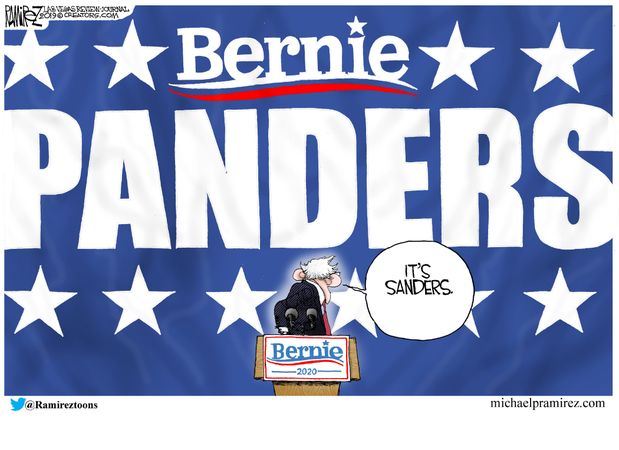
Courtesy of Michael Ramirez via Townhall

Musical Interlude; My Favorite Vocalists

Janet Jackson, "If"

Friday, June 21, 2019

Post #4153 M: Woods on Rothbard;; Woods on the Mises Caucus and Tenth Amendment Center

Quote of the Day

Grow old along with me! 
The best is yet to be, 
the last life, 
for which the first was made; 
our times are in his hand who saith, 
'A whole I planned, youth shows but half; trust God: See all, nor be afraid!' 
Robert Browning  

Tom Woods on a Libertarian Historian


Tom Woods on the Mises Caucus and the Tenth Amendment Center


One of My All-Time Favorite Songs


Choose Life


Political Cartoon

Courtezy of Pat Cross via Townhall

Musical Interlude: My Favorite Vocalists

Janet Jackson, "Miss You Much"

Saturday, February 9, 2019

Post #3982 M: Enabling Self-Defense Through Homemade Firearms; Interviewing 77-Centers

Quote of the Day

It is dangerous to be sincere unless you are also stupid.
George Bernard Shaw 

Homemade Firearms


Interviewing 77 Centers


The Surviving BeeGee Barry Gibb


My favorite soft rock and disco phase BeeGees hits:


Choose Life


Political Cartoons


Musical Interlude: Simon & Garfunkel

"Bridge Over Troubled Water". Their third and final #1, one of the greatest songs ever written and  their signature hit.

Tuesday, October 2, 2018

Post #3827 M: Intellectually Vacuous Ideological Feminism; Amazon's New Minimum Wage

Quote of the Day

There is no greater impotence in all the world 
like knowing you are right 
and that the wave of the world is wrong, 
yet the wave crashes upon you.
Norman Mailer  

Ideological Feminism

I don't actually agree with a lot that Klavan says here and consider myself a pro-life feminist. But I loathe the divisive, embarrassingly simplistic rhetoric. Recall that it was a male-dominant government and electorate that agreed to implement suffrage. We men have mothers, sisters, and daughters. We don't need a bunch of judgmental bastards cramming propaganda down our throats. It's sad to see so much resources in colleges and government treating intelligent men as secret members of the he-men woman hater's club. As a libertarian, I believe in a free exchange of ideas, not an oppressive, intolerant ruler that seeks to implement its agenda, not by persuasion but by force. When I see all these female political whores (Dem senators from Hawaii, New York, California, etc.) screaming they believe Ms. Ford's false (and ludicrously inconsistent) accusations against Judge Kavanaugh (see the following segment), they aren't helping the feminist cause. They've put their ideology over search for the truth.


Molyneux on the Kavanaugh/Ford Hearing Moderator Report


The Amazon Minimum $15/Hour Policy


McCartney Breaks Down His Famous Songs


Choose Life


Political Cartoon
Courtesy to Steve Kelley via Townhall


Musical Interlude: My Favorite Vocalists

Paul McCartney & Wings, "Live and Let Die"

Thursday, October 15, 2015

Miscellany: 10/15/15

Quote of the Day
The Chinese use two brush strokes to write the word 'crisis.' 
One brush stroke stands for danger; 
the other for opportunity. 
In a crisis, be aware of the danger
but recognize the opportunity.
John F. Kennedy

Tweet of the Day
Image of the Day


My Latest Favorite New Song (To Me)

I was reading a Catholic post on Maher's comments on Pope Francis' visit when I read a description that he had won a Dove Award for this performance (like a Christian music Grammy). I was so blown away, I bought a licensed track copy ($1.29 via iTunes or Amazon Digital Music).


My Greatest Hits: Oct. 2015
Political Liberty


The Sharing Economy vs. Local Protectionism


Choose Life: The Mystery of Baby Talk

If you play it backwards, she says that Paul is dead.... :-)


Political Cartoon
Courtesy of Nate Beeler via Townhall
Musical Interlude: My Favorite Vocalists

Meat Loaf, "Paradise By the Dashboard Light". A classic Steinman track. Given my struggle with weight over the years and my singing experiences as part of my high school choir, Meat Loaf (Marvin/Michael Lee Aday) has been an inspiration. His vocals, however, are on a whole other level; some of the notes he hits in this and other songs are unreal, much more difficult than you can imagine unless you're a performer. (There are other performers with great pipes, like Steve Perry, Steve Tyler, Art Garfunkel,  and whatever Richard Harris does at the end of "MacArthur Park".) I've never done vocal training, but I'm not sure I could ever hit some of those notes; I can break into a thin falsetto. By the way, the video of Meat Loaf and Ellen Foley is just incredible--not just the vocals, but the choreography, the facial expressions, etc. I'm not crazy about the underlying theme of premarital sex, but you have to give props to a guy who lives up to his commitments.


Judge Napolitano on Hillary Clinton's Email Problem


Hillary & Her Emails – All You Need to Know - NEW LINK "Judge Napolitano's Chambers"http://video.foxnews.com/v/4560215786001/
Posted by Judge Andrew Napolitano on Thursday, October 15, 2015

Saturday, November 15, 2014

Miscellany: 11/15/14

Quote of the Day
One measure of leadership is the caliber of people who choose to follow you.
Dennis Peer

Image of the Day

Via Rand Paul
via the Tea Party
John Stossel simulates a business startup meeting a government bureaucrat
via Lawrence Reed


Rant of the Day
Daily supplement use is the easiest, fastest, safest and cheapest way to bring costs down suddenly, dramatically and permanently and improve health at the same time. 
If every high-risk American over the age of 55 took an ordinary omega-3 supplement -- just like the one I'm sure you take -- we'd save $2.1 billion per year in health care costs, according to a major new study. 
Want to save even more cash? Throw in another one of my favorites, the B vitamins that can protect heart, bones and brain and prevent or reverse chronic disease, and we'll save another $1.5 billion a year.
That's $3.6 billion -- BILLION -- saved every year with two ordinary vitamins taken by just one set of carefully chosen patients. And these supplements may run you about 5-10 cents a day. 
But what does our government do? They use your tax dollars to run active campaigns AGAINST vitamin and supplement manufacturers. Heck, every chance they get, they try to run the vitamin makers out of town on a rail.
It's more proof that government health care isn't about saving money, and it's certainly not about saving lives. It's a basic redistribution of wealth, crony socialism at its worst, as you're forced to pay for the health care of people who don't want it, don't need it or, in too many cases, refuse to work to earn the cash to buy their own. 
Your money is going to Big Government's pals, like insurers and drug companies, to treat people who never had to become sick to begin with. And we can stop it tomorrow, with little 5-cent-a-day supplements you can buy anywhere. - William Campbell Douglass II, MD
Facebook Post of the Day
I voted yes on ‪#‎HRes676‬, which authorizes the speaker of the House to initiate or intervene in civil actions against the president for failing to uphold the law "with respect to implementation of any provision of [Obamacare], including a failure to implement any such provision."
Over the past five years, the president has unilaterally delayed implementation of parts of Obamacare, refused to enforce certain immigration laws, and provided waivers of work requirements for welfare recipients, among other things—all in contravention of the laws as written. Absent constitutional objections, it is the duty of every president to "take Care that the Laws be faithfully executed." If the president simply doesn't like the law—or feels that delaying implementation will benefit him politically—he can work with Congress to change it.
Suing the president is not my preferred method to hold the president accountable. Congress should use more effectively its power to approve or disapprove spending. Still, it is reasonable for Congress to use all tools available whenever any president violates the Constitution, including requesting the opinion of the judicial branch.
It passed 225-201  - Justin Amash
Politically Incorrect Joke of the Day
"Did you hear the news? The Washington Redskins are removing that embarrassing, demeaning word from their team name. From now on, they’ll just be called The Redskins," says Bryan Stevenson.  Via Lew Rockwell
The Early Years of a Great Pro-Liberty Economist of Color


Feedback Corner

(Libertarian Republic). Ted Cruz Vs. Rand Paul: What Should The GOP Do Now? [PODCAST]
Ted Cruz is too idiosyncratic, strident and confrontative to ever win over independents and moderates; he is also far more militaristic than Paul. Rand Paul is a smoother, more consistent pro-liberty conservative, a more pragmatic, less strident version of his Dad. He actually talks the talk to minority groups, reaches across the aisle for prison reform, civil liberty reform, Constitutional limits on the Presidency's war-making. Cruz is more of a loose cannon, willing to shut down the government at the drop of a hat. As one of the true libertarian-conservatives, I clearly favor Rand Paul.

(Libertarian Republic). "The Republican Party Needs To Be More Welcoming To Immigrants." - Senator Rand Paul
Rand Paul is absolutely spot on. If you are for liberty, you are for immigration, period. No arcane nativist nonsense.

Choose Life


On One of My Favorite Remakes of All Time

October 16, 2006
Dear Dan: Though you never knew, for many years before you recorded my song, YOU were my idol. Your sensitive lyrics and wildly, grand arrangements spoke to me in a way that always sent a thrill through me. The first time I heard "Leader of the Band", I was awash in tears. Having had a not so great relationship with my own Dad, it touched me in ways that I can't even really explain.
So, there really is no way that I can put into words the feelings that went through me when my good friend, Len Green called me and he said, quote: "John, you won't believe me when I tell you this but Dan Fogelberg has recorded your song and from the looks of the full page ad in Billboard, it looks like the push cut/single from the album.” I was floored, stunned. I told Len, "You must be kidding, he never records other peoples songs". Well, I have the chart on my wall from Billboard, week ending November 17th, 1990 and there sits my song at #1 on the Hot Adult Contemporary Chart.
To this day, hundreds of people have recorded "Rhythm of the Rain" but none have ever, and I mean NO ONE has ever done it better than you. I always felt my own recording of it, huge as it was, was weird as it's really a sad song about lost love and here we are doing it spritely and uptempo. Back to your music though. Seems in all the music you write, nature plays a great role. Also, your style, the chord changes you use; there is so much spirituality and power in what you do. Netherlands just blew me away, I even have Twin Sons of Different Mothers. It would take me way too long to make a list of my favorites. I've tried in vain to emulate what you do or even come close, but I've resigned myself at the ripe old age of 68, that I probably never will.
To finish: You have no idea what a thrill it was for me to chat with you for a few minutes back stage at the Greek. I was so in awe to be in your presence and was so nervous I never really got to say all that I wanted to, so hope this email makes up for it. I'm so saddened to hear of your plight and all I can say is "Keep up the Good Fight”. The world needs more of you and more of what you do. Get well and get back in the studio again.
From the deepest part of me, Thank you so much for YOUR wonderful music and thanks for doing such a great job with MINE.
Gratefully,
John Claude Gummoe
Composer of "Rhythm of the Rain", lead singer with The Cascades
[As Dan's fans know, he was diagnosed with advanced prostate cancer in mid-2004. For a while he went into remission, but it returned and he passed in late 2007. My baby sister gave me a copy of the (1990) The Wild Places, which was an outstanding move on her part not knowing my taste in music and not even being in primary school when I left for college. The soulful, slow, despairing interpretation and awesome sax background is faithful to Gummoe's lyrics; I have sung along with Fogelberg's recording dozens of times and never tire of hearing it. Gummoe's tribute to Fogelberg is one of the highest forms of respect I've ever heard from one songwriter to another; I know if a famous singer-songwriter covered one of my songs (no, they haven't been published or recorded yet), it would be an honor.]


My Greatest Hits: November 2014

I think this is the second month a 2012 post has placed among the top 5 posts. I'm pleased to see one of this week's one-off posts has already done well enough to place (I liked it myself, and it's been interesting seeing readers steadily picking up on it since it was published):
Political Cartoon

Courtesy of Dave Granlund via Libertarian Republic
Courtesy of Gary Varvel via Patriot Post
Courtesy of the original artist via Reason
Courtesy of the original artist via Patriot Post
Courtesy of Chip Bok via Townhall

Musical Interlude: My Favorite Vocalists

Glen Campbell, "I Wanna Live"

Wednesday, August 29, 2012

Miscellany: 8/29/12

Quote of the Day 
What was hard to bear is sweet to remember.
Portuguese proverb

Reflections on the GOP National Convention Day 2

In yesterday's post I included an official version of Neil Boyd's version of  "God Bless the USA"; I finally found a Youtube video of his dynamic performance last night:


The Republican Party did a wonderful thing tonight: tonight's invocation was given by Ishwar Singh. South Carolina Governor Nikki Haley is from a Sikh family; her father referred the party, which contacted him in the aftermath of the Sikh tragedy in Wisconsin, to Ishwar Singh, the head of the Sikh Society of Central Florida. Ishwar Singh, who wore a turban and beard and is an engineer by profession, leads a 300-family gurdwara (Sikh temple) in Orlando, delivered the first Sikh invocation of either party in the 100 years of Sikhs in America. American Sikhs are a blessing; I welcome immigrants of all races and creeds, each one with an unalienable right to life, liberty and pursuit of happiness and celebrate the achievement of their dreams. Any assault against our fellow citizens is fundamentally violence against the very foundation of this republic.

Sen. Scott Brown's (MA) beautiful 6-foot daughter Ayla Brown, a Top 16 finalist in American Idol 2006 who played basketball for Boston College until her 2010 graduation, sang the national anthem. I believe that her latest album is oriented to the country music audience. I was sorry to see her leave American Idol.


Both John McCain and Condoleezza Rice focused on a proactive foreign policy. Any familiar reader knows that I've become increasingly skeptical of our role in the Middle East and Gulf region. We have been in Afghanistan now for past a decade. My guess is that there are many other countries where human rights are not recognized or protected. Enough American blood and treasure already; we can't afford it with a nearly $16T debt. I see our efforts as morally hazardous: it's time for regional neighbors to step in--after all, instability will result in refugees throughout the region.

There was one telling quote that I, as a free trader, immediately noticed in Dr. Rice's speech, an implicit criticism on the Obama Administration for doing almost zero on the free trade front, only recently having moved on free trade pacts negotiated by the Bush Administration. Here is the same observation I found in a recent op-ed Dr. Rice published on FT.com:
But consider this: China has signed free-trade agreements with 15 nations over the past eight years and has explored FTAs with some 20 others; since 2009 the US has ratified three FTAs negotiated during the Bush administration and it has continued – but not concluded – talks on the Trans-Pacific Partnership, which began in 2008.
Paul Ryan gave a great speech, but I really loved his tribute to his beaming Mom, which I thought was a truly wonderful moment in the speech:
My Mom started a small business, and I’ve seen what it takes. Mom was 50 when my Dad died.  She got on a bus every weekday for years, and rode 40 miles each morning to Madison.  She earned a new degree and learned new skills to start her small business.  It wasn’t just a new livelihood.  It was a new life.  And it transformed my Mom from a widow in grief to a small businesswoman whose happiness wasn’t just in the past.  Her work gave her hope.  It made our family proud.  And to this day, my Mom is my role model. 
Paul Ryan's 78-year-old mom Betty Ryan Douglas
at a Florida campaign event courtesy of the Blaze
Some basic excerpts:
President Obama was asked not long ago to reflect on any mistakes he might have made.  He said, well, “I haven’t communicated enough.”  He said his job is to “tell a story to the American people” – as if that’s the whole problem here? He needs to talk more, and we need to be better listeners?
Ladies and gentlemen, these past four years we have suffered no shortage of words in the White House.  What’s missing is leadership in the White House.  And the story that Barack Obama does tell, forever shifting blame to the last administration, is getting old.  The man assumed office almost four years ago – isn’t it about time he assumed responsibility?
Yet by his own decisions, President Obama has added more debt than any other president before him, and more than all the troubled governments of Europe combined.  One president, one term, $5 trillion in new debt. 
He created a bipartisan debt commission. They came back with an urgent report.  He thanked them, sent them on their way, and then did exactly nothing.
Republicans stepped up with good-faith reforms and solutions equal to the problems.  How did the president respond?  By doing nothing – nothing except to dodge and demagogue the issue. 
So here we are, $16 trillion in debt and still he does nothing. 
So here is our pledge. 
We will not duck the tough issues, we will lead.
We will not spend four years blaming others, we will take responsibility.
We will not try to replace our founding principles, we will reapply our founding principles. 
Finally, on the lighter side:
We’re a full generation apart, Governor Romney and I.  And, in some ways, we’re a little different.  There are the songs on his iPod, which I’ve heard on the campaign bus and on many hotel elevators. He actually urged me to play some of these songs at campaign rallies.  I said, I hope it’s not a deal-breaker Mitt, but my playlist starts with AC/DC, and ends with Zeppelin.
Romney's Spotify List via Huffington Post
You can check my "favorite songs" tag at the right, but here's an updated list of what's currently on my iPod Shuffle:
  • Pretty Amazing Grace - Neil Diamond
  • I Want to Know What Love Is - Mariah Carey
  • Hands - Jewel
  • Like a Prayer - Madonna
  • Dreams to Dream - Linda Ronstadt
  • I Hope You Dance - Lee Ann Womack
  • One Good Woman - Peter Cetera
  • Something Inside - from "August Rush"
  • Annie's Song - John Denver
  • Whatever Happened to Old-Fashioned Love - BJ Thomas
  • Mary, Did You Know? - Christ Church Choir
  • I Was Made for Loving You - Kiss
  • I am America - Krista Branch
  • Marry Me - Neil Diamond
  • All My Love - Led Zeppelin
  • When the Night Comes - Joe Cocker
  • Annie's Song - John Denver
  • The Way You Look Tonight - Bay City Rollers
  • Midnight Wind - John Stewart
  • Amazed - Lonestar
  • Love of My Life - Jim Brickman/Michael W. Smith
  • Perhaps Love - John Denver
  • Harmon Killebrew - Jeff Arundel
  • If I Thought You'd Ever Change Your Mind - Agnetha Fattskog
  • Glory of Love - Peter Cetera
  • Your Wildest Dreams - Moody Blues
  • I Only Have Eyes for You - Art Garfunkel
  • St. Elmo's Fire (Man in Motion) - John Parr
  • Two Out of Three Ain't Bad - Meat Loaf
  • All I Know - Art Garfunkel
  • I'll Stand By You - Pretenders
  • I Know You're Out There Somewhere - Moody Blues
  • Will You Still Love Me Tomorrow - Dave Mason
  • Story of My Life - Neil Diamond
I'm not sure what songs Paul Ryan listens to--but AC/DC's "Highway to Hell" does seem to describe Obama's forced march down the road to serfdom.

As for Mitt, wow, it looks like a cross between early 60's rock and later country music. Yes to "Good Vibrations", "Runaway", "Ring of Fire", and "Crying". Mitt, Mitt, Mitt: Willie Nelson for "Over the Rainbow"? Really? Oh, come on!


Rothbard and the Origins of Progressive Regulation

When I went on my first UH Catholic Newman retreat (ironically my first nephew was born that weekend), it was an amazing personal experience, and it's where I met my liberal friend Tim, now an accounting professor at a southern California Catholic college. (Poor Tim; he remembers me from a time when I stood up for Ted Kennedy at my local Democratic precinct caucus. I took my first economics course that semester I met Tim, and it changed my politics. (The course was totally nonpartisan, but I started questioning my political assumptions.))

As I recall, the retreat included meals, except for Friday evening when the retreat started. We were expected to have eaten dinner before we arrived. The retreat was several miles away from campus in the east Texas woods. I went in a car with retreat veterans, and they decided to stop at this diner just within a mile or so of the retreat location. Now I have to admit here even today, when I eat out, I prefer diners; I have to watch my diet, but I love Texas staples like chicken fried steak or deep-fried jumbo shrimp, chicken, etc. I love Grandy's, although I don't think I've eaten at one since I worked on a State of Oklahoma project while with Oracle Consulting (you spread a packet of honey on a split fresh oven-baked roll, and I swear it's like heaven on earth). The point of the story is that I loved the country cooking at this little diner and for the remaining retreats I attended, going to the diner became part of my ritual, and I would sing the praises of this little diner. I'll never forget the time we left the diner; one of the new retreat attendees told me that he thought I had oversold the diner: he expected better and it was ordinary as far as diners go. As far as I was concerned my dinner was great, but I understand people have different tastes.

As I write, I have only sampled some of the works of Rothbard, and I had not reviewed any videos of his work. But I found this video lecture snippet absolutely riveting (the point of the little story above is that others may think it's just a part of a boring lecture...) Rothbard is really setting the stage here for explaining the anti-trust era. (In fact, Mises has a Rothbard excerpt titled "Abolish Anti-Trust Laws") One of the most persistent myths underlying minimum prices (established or enforced by the government) is that predatory firms (with more resources) will undercut the competition below market and drive them out of business. Once the competition is driven out, the predatory firm sets prices over the former market price and enjoys windfall profits at the expense of the consumer.

I will simply point out that general price fixing in a dynamic market by government is almost always wrong from the get-go: as I've quoted Heraclitus before: "No man ever steps in the same river twice, for it's not the same river and he's not the same man." Over time, technology improves and the cost per unit widget declines; in a competitive economy, this means prices decline over time. There can also be creative destruction where cost structure can dramatically altered by innovation: consider, for instance, emails in contrast to the substitute use of USPS mail. Emails can be sent almost instanteously, more reliably and for negligible cost. There are various scenarios where almost any revenue goes straight to the bottom line: e.g., empty plane seats; an empty truck heading back to its home or branch location (before trucking deregulation). The brokerage industry was deregulated in 1975; artificially high fees had been maintained for trading stocks; Schwab, an online brokerage, dropped fees by 75% from 1998 to 2006.

Then there are the notorious browser wars that started out between Netscape and Microsoft. (Note: I have no direct financial interest in Microsoft.) Netscape used to charge non-academic users up to $40-50/copy of its browser; Microsoft distributed its freely. Whereas much has been made of Microsoft's dominance on the PC platform, comparably featured operating system alternatives often cost significantly more than Microsoft's $40-60 license per PC. Microsoft has a history of supporting a number of software vendors for its platforms, including alternatives to its own application software products. Netscape also ported its version to multiple operating systems. I should point out that Microsoft had approached Netscape for licensing its software: it saw browser technology as key innovation for its operating system. Netscape was well aware of Microsoft's resources, status as a competitive threat, and the likely outcome of spurning a licensing deal: recall that Microsoft's dominant Office Suite emerged under Windows, not DOS. And let me point out Microsoft did not suddenly start charging for Internet Explorer after Netscape decided to make its browser open-source (now currently evolved into Mozilla Firefox); in fact, I've installed multiple other free browsers (Chrome, Opera and Safari) on my PC's. I should point out that, just as in the case of the misguided government delay of the Sirius/XM merger, the anti-trust deliberations against Microsoft were similarly misguided. As in the case of satellite radio (e.g., wireless, high definition radio, etc.), there is competition to PC's in Internet access (e.g., for tablets/mobile,  iOS (Apple) has a 66% share, and Android (Google) has a 20% share). While Apple and Google stock prices have soared over the past decade, Microsoft's has barely treaded water. Whereas I didn't like some of Microsoft's hardball tactics at the time, there can be little doubt that the misguided actions of government meddling have been pushing on a string and are fundamentally anti-competitive. Government is used as a competitive weapon by companies which have made bad business decisions or have failing business models. This can result in analysis paralysis in the American crown jewels of high technology companies and impede introduction of innovative products and services. This following excerpt is somewhat dated, from an open letter to then President Clinton, signed by hundreds of economists, but I think the argument and insights are still relevant today:
The current spate of heightened antitrust activism seems to suggest that anti-competitive business practices abound.  Headline-grabbing cases against Microsoft, Intel, Cisco Systems, Visa and MasterCard, along with a flurry of merger investigations now under way, would appear to demonstrate the need for a vigorously enforced antitrust policy that will create checks and balances to eliminate consumer harm.
However, consumers did not ask for these antitrust actions — rival business firms did.  Consumers of high technology have enjoyed falling prices, expanding outputs, and a breathtaking array of new products and innovations.  High technology markets are among the most dynamic and competitive in the world, and it is a tribute to open markets and entrepreneurial genius that American firms lead in so many of these industries.  But, these same developments place heavy pressures on rival businesses, which must keep pace or lose their competitive races.  Rivals can legitimately respond by improving their own products or by lowering prices.  Increasingly, however, some firms have sought to handicap their rivals’ races by turning to government for protection
.    
Where antitrust authorities respond to these protectionist demands, the workings of markets are short-circuited.  Antitrust protectionism means that market decisions about how to compete for consumers’ favor are displaced by bureaucratic and political decisions. Many of the proposed
interventions will weaken successful U.S. firms and impede their competitiveness abroad.
Dominant companies must rely on both efficiency and innovation; low prices and margins discourage competition. New technology, materials or methods may introduce radically lower cost structures. Government interference in the market, whether imposing price floors on limo competition to taxis or California power companies are required to generate a certain percentage of high-cost renewal energy (with rates accommodating capture of increased costs to the consumer), is never in the interest of the consumer.


Musical Interlude: My Favorite Groups

Toto, "Pamela". This is the last of my Toto series; tomorrow I'll start a very brief series on Janis Joplin/Big Brother & the Holding Company (just a couple of songs). Just in case you're wondering: over the years I've bought a large number of greatest hits albums for a number of artists; in my musical interlude series, I'm generally listing artists with one or more albums in my personal collection.

Sunday, June 10, 2012

Miscellany: 6/10/12

Quote of the Day 

The wisest men follow their own direction.
Euripides

Factoid of the Day

From Cato Institute's Chris Edwards:
The fee [on all nuclear electric utilities by Nuclear Waste Policy Act of 1982, i.e., Yucca Mountain] currently generates about $760 million annually for the Nuclear Waste Fund, which by 2008 had accumulated a balance of $22 billion. But this fund is just an accounting entry—the utility charges have actually gone to the U.S. Treasury and been spent on other federal activities, not on the storage of nuclear waste.
Hmmm. Methinks that we are talking about some kind of waste, but it's not nuclear.

The College Bubble:
George Will, "Subprime College Education": Thumbs UP!

I've written multiple posts about some of my experience as a past full-time college professor, and Mark J. Perry of Carpe Diem often posts on a variety of college related topics, including the college cost bubble, the top-heavy (administrative) layer, grade inflation, etc.

George Will has a distinctive style and always finds a way of weaving some fairly distinctive takeaways into his discussion. Here are a few that caught my eye (my edits):

  • " Since 1961, the time students spend reading, writing and otherwise studying has fallen from 24 hours a week to about 15."
  • "Tuitions and fees have risen more than 440 percent in 30 years as schools happily raised prices — and lowered standards — to siphon up federal money."
  • "As many people — perhaps more — have student loan debts as have college degrees. Twenty-nine percent of borrowers never graduate."
  • "In 2009 the base salary of UC Berkeley’s vice chancellor for equity and inclusion was $194,000, almost four times that of starting assistant professors. And by 2006, academic administrators outnumbered faculty."
  • "In 2010, the New York Times reported on Cortney Munna, then 26, a New York University graduate with almost $100,000 in debt. Her degree is in religious and women’s studies. [Her job:] $2,300 monthly after-tax income as a photographer’s assistant. [Loan payment:] $700 monthly."

I have ZERO patience or tolerance for politically correct, intellectually pretentious, vapid propaganda masquerading as a respectable, "legitimate" academic discipline, i.e., diversity, ethnic/women's studies, inclusion, and other assorted academic claptrap. [If there is any legitimate research in these areas, they should be special-interest topics in a more comprehensive reference discipline like sociology and history.] George Will touches a raw nerve when he talks about colleges eliminating programs in engineering and European literature to make room for pseudo-sciences, and doing away with mainstream requirements to make way for some pushing-on-a-string elitist-prescribed vacuous self-esteem course (as if pervasive progressive groupthink isn't enough!)

This is the same-old, same-old nonsense. In the description for my blog, I told about things like flattened structures; I've preached against top-heavy school administrations. This is not the 1960's when students of color were denied permission to state universities. The US is a different place: for example,  in 2010, three former female CEO's ran for governor or the US Senate as Republicans. Why in the world are universities sinking this kind of money and personnel into an already-decided issue?

I think, like all bubbles, the college bubble is going to end badly. I don't know any private sector banker whom would think it's a good idea to loan $100K for education in a field with dubious employment prospects, like religious and women's studies. I suspect that information technology will revolutionize the college experience, as it has already started with online courses unavailable when I taught; for example, there could be virtual, extensible classrooms, cross-university class enrollments, and small university departments could store past class lectures for self-directed classes or when class enrollments are insufficient. We could see alternate approaches like universities partnering with community colleges,  residency periods at the end of a degree program, etc.

All of this is speculative, of course, but one thing I'm certain of: the federal government cannot afford to prop up the status quo. It is unsustainable. Plus, watered-down degree programs fool no one.

Hey, Mr. Congressman:
Take a Stand for Liberty
Then on Election Day Morning
I'll Come Voting for You

Kudos to Tom McClintock (R-CA) (yes, there are conservatives in the People's Republic of California; they are protected by the Endangered Species Act). Congressman McClintock proposed a number of amendments to strip various funding for energy industry or program subsidies (over $2B across multiple amendments-even the granddaddy program sponsoring Solyndra!), and over 100 Republicans joined the opposition in defeating the cuts.


The Unintended Consequences of 
Politically Correct Labor Laws

From the Gray Lady (my edit):
The sheriff arrived at the factory here to shut it down, part of a national enforcement drive against clothing manufacturers who violate the minimum wage. But women working on the factory floor — the supposed beneficiaries of the crackdown — clambered atop cutting tables and ironing boards to raise anguished cries against it. “Why? Why?” shouted Nokuthula Masango, 25. She made just $36 a week, $21 less than the minimum wage, but needed the meager pay to help support a large extended family that includes her five unemployed siblings and their children.  The women feared being out of work more than getting stuck in poorly paid jobs. Over a third of South Africa’s workforce is now idle. [Because of global competition], the number of garment workers employed in South Africa has plummeted to 60,000 from 150,000 in 1996. If the more than 300 factories violating minimum wages ultimately close down, 20,000 more jobs could vanish.
I think that many progressive critics engage in perceptual bias using our cultural expectations, our cost of living and labor standards. Personally, I would not like to work in a sweatshop. But what is clear here is that for these women, this was the best option to earn the most wages. The opportunities at the given minimum wage are already oversubscribed; the minimum wage is just an arbitrary number. The law of supply and demand works: at a lower wage, more labor hours are available. These ladies don't need some progressive knight in shining armor saving them from the world of consensual employment, just like some liberating army destroying a village to save it.


Musical Interlude: My Favorite Groups

Tom Petty & the Heartbreakers (with Stevie Nicks), "Needles and Pins". Remakes are interesting--most barely hit the charts. Johnny Rivers made a living out of it; Linda Ronstadt consistently did it in the later 70's. Céline Dion has done it (e.g., "The Power of Love" and "If You Asked Me To"), Whitney Houston did it at least 3 times ("The Greatest Love of All", "The Star-Spangled Banner", and "I Will Always Love You"). A Sonny Bono co-authored classic for the Searchers (Jackie DeShannon did an earlier hit version that didn't chart well but is amazing); I think I also heard a killer version in the late 1970's, but I don't recall the artist. Tom Petty proves that he can put his own brilliant mark on someone else's material--and what can I say about Stevie Nicks? "Rhiannon", "Gypsy", and "Leather and Lace"?

My personal favorite remakes? I love the originals, but I think the remakes bring the respective songs to a whole new level: Dave Mason's "Will You Still Love Me Tomorrow?", the Hollies' "Stop! In the Name of Love", Dan Fogelberg, "The Rhythm of the Rain", Simon, Garfunkel and Taylor's "What a Wonderful World",  and Johnny Rivers' "Baby, I Need Your Loving".

Friday, June 8, 2012

Miscellany: 6/08/12

Quote of the Day 

A compliment is a gift, 
not to be thrown away carelessly, 
unless you want to hurt the giver.
Eleanor Hamilton

Vintage Milton Friedman:
A Real Economist
Not a Nominal One (aka Paul Krugman)

Okay, if any reader by now doesn't realize that I love plays on words... I shouldn't need to explain that we can speak of real (inflation-adjusted) versus nominal price increases. I'm also using the words to reflect my comparative assessment of these Nobel Laureates in economics. (This blog is not particularly receptive to the dangerous policies advocated by neo-Keynesian (government spending favorable) Paul Krugman.)

There are a few points to note here:
  • unless tax brackets are inflation-adjusted, the government gets a tax windfall from any nominal increases in wages, no vote required.
  • inflation is a backdoor/hidden tax with no accountability by elected officials (e.g., easy money policy: more dollars for the same amount of goods and services). Politicians get credit for nominal tax cuts, but those cuts are illusory, mitigated by inflation
  • there are opportunity costs with funding a government deficit: investment dollars are unavailable for the real (private sector) economy, driving up the costs of doing business
  • business vs. individual taxes: money is fungible. Individuals are "more equal" than business when it comes to taxes. But this is an arbitrary distinction: employer benefit contributions on behalf of an employee are really the hidden portion of an employee's wages/compensation.
  • tax credits vs. deductions: (flat) credits are a backdoor form of class warfare in a progressive income tax system, because deductions occur at the margin at a value related to your aggregate income level bracket.
  • tax expenditures: government sees the taxes you save through a deduction or exemption (pretax retirement, healthcare insurance, home mortgage interest, etc.) as an expenditure (i.e., subsidy)
The general theme here is that progressives engage in doublespeak; in order to win political support, they engage in all sorts of intentionally misleading mechanisms to mask, transfer or defer taxes--e.g., "the other guy pays" (e.g., class warfare or business tax hikes); business regulations and mandates; easy monetary policy; and asynchronous tax policies (means-test or cap tax deductions or credits while progressive income taxes are due immediately, in full).

Some parts of the video are likely dated; I think, for instance, that there has been more of an effort to adjust for inflation in various tax policies. One interesting point of discussion involves the disposition of deductions. Some conservatives will argue against the elimination of various "expenditures", arguing that it amounts to a de facto tax increase  (see David Friedman's criticism of them here). I think that government should not be in the business of providing incentives through tax gimmicks. When the progressives argue against oil industry tax breaks, I'm in general agreement--except I think that the massive subsidies, loan guarantees, electric vehicle tax breaks, etc., must also be on the table, i.e., equal protection/tax simplification, NOT pick-and-choose tax break policies.


Pin a Tail on the Donkey

I like coming up with tongue-in-cheek segment series and tags. This new series will focus on rebukes to ideological progressive politicians and their cronies, like neo-Keynesian economist Paul Krugman (see above segment on Friedman). I will say this much about Krugman: he is remarkably effective (but ultimately unconvincing) spokesman for neo-Keynesian government fiscal intervention; my personal opinion (and that of others, say here) is that he picks and chooses his data to frame his point of view, not unlike the infamous hockey stick study at the core of Climategate.

Let me be clear where I stand on the question of fiscal discipline: when we have a deficit, we are borrowing against future consumption to push consumption today. If Obama was to leave with over $5T in additions to publicly-held debt--effectively doubling what he inherited--it would take more than 2 years for the government to pay off ObamaDebt EVEN IF IT DIDN'T SPEND ANOTHER PENNY IN THE INTERIM. And for the past 3 years, Paul Krugman has been screaming at the top of his voice we're not spending nearly enough!

It's sheer madness, of course; whenever I hear another clueless Keynesian progressive repeat his boorish mantra "trickle-down economics", I want to scream back "trickle-down government" (whatever is left after the self-preserving bureaucratic monster has fed). Money is fungible: government spending is hardly intrinsically meritorious; it has no incentive to improve efficiency beyond the latest election, with many interest groups vested in status quo or expansion of regulations, mandates or benefits. Taxpayers are captive customers; government uses force to enforce payment of taxes, plus it holds control over fiat currency printing presses. It is next to impossible to downsize the federal government. Austerity means little more than living within your means, leaving more resources for the more efficient, effective private sector. Inefficient operations or lack of innovation in products and services provide potential vulnerabilities for competitors to exploit. Legacy obsolete cost structures are spilled milk. Keynesians like Krugman oppose decreased government spending as a matter of principle, even if austerity is little more than improved government efficiency like in the private sector. I see this as little more than a macro version of Bastiat's broken window fallacy. The seeds of renewed economic growth lie in giving up the ghost of obsolete costs.

Krugman, a frequent guest to ABC's This Week, is an effective, articulate communicator for his point of view, but he has the smart aleck, pervasively condescending "I-have-a-Nobel-Prize-and-you-don't" air about him. You almost wish that you had a designated momma on hand to slap the taste out of his mouth. (People have made similar comments about me; I think it has more to do with the fact that I'm direct and have self-confidence. However, I have a sense of humor about myself, and my focus is on the merits of the argument, not trying to make the other fellow look like an idiot.) What concerns me is that Krugman is using his obnoxious personality to distract attention away from his pathetically poor case for penny-wise, pound-foolish irresponsible government overspending.

Mark Skousen, an investor in the Austrian School tradition, had an overseas encounter with Krugman, whom at the time was shilling his latest book entitled "Big Government Spends Best". (I hate to spoil the ending to Krugman's book, but if you take a couple of Prozacs and get a good night's sleep, you'll forget everything that Krugman has to say and feel better in the morning.) Skousen mentioned conversing with Krugman:
What did he think of the Canadian success story, how Canada faced a similar fiscal crisis in 1995, and cut federal spending and employment?  All the Keynesian economists opposed it, but it turned out to be a big success — they balanced the budget in two years and the economy boomed.  Then they went on a 11-year supply-side tax cut policy, and reduced capital gains, national sales, and corporate income (rate is now 12%!).    They had no financial crisis in 2008, and no bank failures. [Krugman says Canada exported its way to growth through a weak Canadian dollar.]
I asked, “Isn’t Spain’s problem of 25% unemployment all about inflexible labor markets, the fact that Spanish firms are discouraged from hiring new workers because of government regulations?” [Krugman argued that overregulated labor was small potatoes.]
“What about austerity?”  I asked.   He said he opposed it now, but once we are over the recession, austerity would be required.  
Krugman is slippier than a wet noodle to nail down. But I believe that Skousen is correct on all counts.

Austerity? Yes, Krugman sees austerity with all the conviction of St. Augustine, whom famously wrote, "Lord, Make me chaste, but not yet." I can hardly wait for Krugman's next book; it'll probably be a diet book: "350 Pounds and the Michael Phelps Diet"; sure, austerity (diet and exercise) will be important one day, but we first need to restore the obese man to rotund health...) Can I  see a show of hands of anyone  convinced that a confirmed Keynesian will ever think it's a good time to cut spending if he is convinced federal spending is good for the economy?

Toomas Hendrik Ilves, the President of Estonia, doesn't quite rate one of my coveted IPPON! awards for his responses to Krugman's recent post damning Estonia with faint praise for its austerity program. President Ilves' tweets were sarcastic and quite accurate, of course. I would caution that President Ilves because I think Krugman specifically picked this fight to hype sales of his book. I don't think President Ilves should be the unwitting party Krugman uses to sell his economic nonsense...

Okay, before proceeding, let me create my first multiple-choice economics question for non-economists:

During 2008-2009, Estonia's economy contracted by 18%--more than Greece's economy has contracted over the duration of the so-called Great Recession. How did the Estonian government respond?
(a) blame George W. Bush and 8 years of failed policies;
(b) double the publicly-held national debt, investing in education, infrastructure, and green energy;
(c) engage in class warfare, scapegoat the political opposition, and go on a blame Estonia tour;
(d) slash civil servant salaries from 10 to 20%, raise the pension age, narrow criteria for health benefits, reduce and simplify taxes, and deregulate labor protections
I won't publish the answer here, but see here for a hint. Here's a quote from a recent Huffington Post article:
Estonia, which in 2011 became the latest country to join the eurozone, has been heralded by some as an austerity success story. That year, it clocked a faster economic growth pace than any other country in the European Union, at 7.6 percent. Estonia is also the only EU member with a budget surplus, and had the lowest public debt in 2011 -- 6 percent of GDP. Fitch affirmed its A+ credit rating last week.
Germany, with the strongest economy in the European Union, has a public debt of just over 80% GDP, and the growth rate of Estonia was 5 times the average. There is a vibrant high tech sector (e.g., Skype) which complains it can't find enough qualified local applicants. Is Estonia out of the woods yet? Wages and unemployment are still on the wrong side of the EU average, but the situation is improving. More impressively, Estonia reelected the politicians whom passed the austerity measures. I am clearly impressed with the Estonian people (versus, say, the Greeks or French, whom irresponsibly and counterproductively scapegoated legislators making tough, necessary decisions).

I think I just found my first candidate for Man of the Year (an award that has no stipend or trophy, just a few bytes in cyberspace). No, I don't mean Paul Krugman...

Musical Interlude: My Favorite Groups

Tom Petty and the Heartbreakers, "A Woman in Love (It's Not Me)". I bought the album once just to get this song which didn't break the Top 40. (I think it hit #5 on the rock chart; I knew the song because it got a lot of airplay when it came out.) This song is a true pop jewel, perfect song, wouldn't change a thing: the screaming guitar work, the driving percussion, the angst-ridden lyrics and vocals, the instrumental bridgework,  the sparkling arrangement. I've listened to and sung along with this song hundreds, if not thousands of times without tiring of it.

I haven't previously published my personal top 10, but other tracks include: Bruce Springsteen's "Candy's Room", Simon & Garfunkel's "My Little Town", Doors' "Touch Me Now", Bee Gees' "Tragedy", Paul McCartney's "Maybe I'm Amazed", Eagles' "Desperado", the Carpenters' "Bless the Beasts and the Children", the Beatles' "Something", and Céline Dion's "To Love You More".

This list may change. In case you're wondering what's on my second 10: Pat Benatar's "Hell is for Children", the Carpenters' "Close to You", Richard Harris' "MacArthur Park", Barry Manilow's "Could It Be Magic", Chicago's "Old Days", Lonestar's "Amazed", the Beatles' "Yesterday", Neil Diamond's "Pretty Amazing Grace", Jim Brickman (featuring Michael W. Smith)'s "Love of My Life", and Peter Cetera's "One Good Woman".

I obviously have dozens of other favorite songs and artists (for a more comprehensive list, see here). There are nuances associated with some of my selections. For example, a few years back a former girlfriend and I were listening to the radio one evening when "Something" and "Close to You" came over the radio, and I sang along, serenading my lady, and then she sang an unfamiliar love song back to me a cappella. A truly spontaneous romantic moment I'll always treasure.