Analytics

Friday, February 6, 2015

Miscellany: 2/06/15

Quote of the Day
I not only use all the brains that I have, but all that I can borrow.
Woodrow Wilson

Guest Quotation of the Day

HT Don Boudreaux of Cafe Hayek
The statesman who should attempt to direct private people in what manner they ought to employ their capitals would not only load himself with a most unnecessary attention, but assume an authority which could safely be trusted, not only to no single person, but to no council or senate whatever, and which would nowhere be so dangerous as in the hands of a man who had folly and presumption enough to fancy himself fit to exercise it. - Adam Smith
Barry Obama and his fellow fascialists have never understood Adam Smith. Central planning is sheer megalomaniac, futile hubris;

Choose Life: Super Bowl Dads


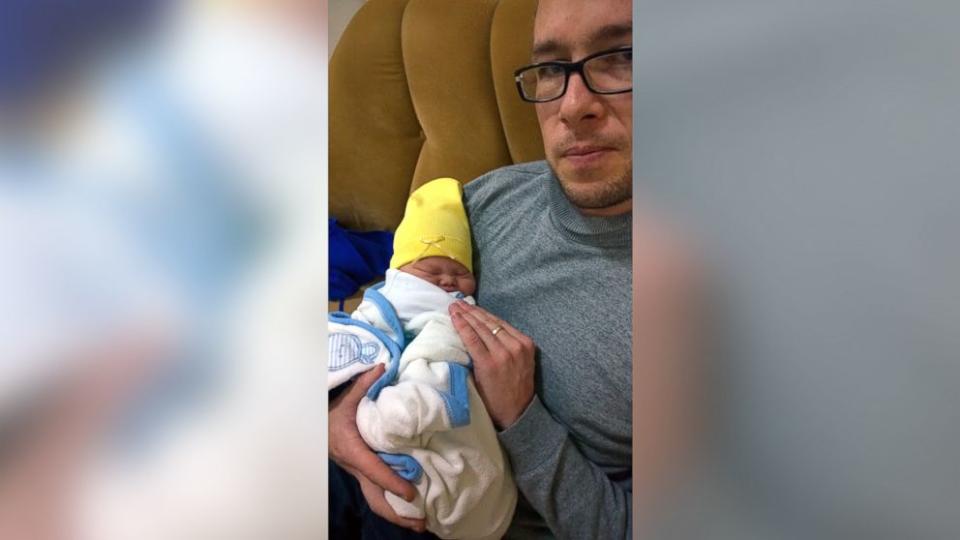
To Be a Father: The Price of Loving One's Son

Samuel Forrest and Baby Leo: via ABC
Samuel Forrest, a New Zealand native, and his Armenian wife had a child, Leo, with Down syndrome. Apparently in Armenian hospitals, parents are given the option of giving up children born with Down syndrome; the Armenian mother/wife decided that she didn't want to keep Leo, but Forrest disagreed. His wife gave Forrest an ultimatum: their marriage or the baby. Forrest wanted both, but the wife has filed for divorce. Forrest is looking to return to his native New Zealand with Leo. See the link above for more details.

Real Austerity: Not Spending Cuts, But Tax and Regulatory Increases

I saw in one of my emails a reference to Fed chief Yellen being a hawk. I believe it was a recycled 2013 paper by Hanke. I initially wondered if this was whether Yellen would finally take her foot off ZIRP policy with apparently today's widely heralded jobs and income report, the point being that central banks are usually a day late and a dollar short in anticipating inflationary pressures in a growing economy. But Hanke is arguing the other part of Fed policy, i.e., QE, which has inflated its balance sheet, hasn't reached the real economy due to banking reforms. Now before going further, there are a few tools that the Fed has to try to cool inflation and/or an overheated economy, i.e., raise interest rates, sell notes/bonds/other assets, or raise the reserve requirement. (We would reverse these tactics to try to snap the economy out of a slump.)

Hanke notes that we have to distinguish two types of money: state money and bank money. The Fed is basically concerned with state money but the bank money--which includes things like deposits and checking accounts. What Hanke argues is that when we saw capital/assets ratio requirements raised as commercial banks served as a key scapegoat during the 2008 economic tsunami, Raising capital or or selling risky assets basically destroys money/tightens the larger banking money supply; in practical terms, a smaller amount left for lending, effectively increasing lending costs: not exactly the kind of thing you want when you're trying to snap the economy out of a slump.

In fact, I refer to regulations as an indirect tax which doesn't hit the government books, but just like taxes is a drain on the company's cash flow. I believe the following is from the same sources I listed in yesterday's post:
During President Obama's administration, a record 21,000 new regulations on businesses were enacted, most of them without Congressional approval.
Last year alone Obama issued regulations costing American taxpayers and businesses an estimated $762 million in regulatory costs per day, according to the American Action Forum.
All told, President Obama's administration has filled 468,500 pages in new regulations in the Federal Register.
Moreover, according to the Competitive Enterprise Institute, the president is poised to unleash another 2,375 new rules on American businesses this year, and again without first giving Congress an up or down vote.
Hanke points out that bank money (at that time) was tight, about 6.5% below trend. Taxes and regulations do to business what the new bank regulatory "reform" did to the "real" money supply. Yellen has de facto been pursuing tight monetary policies, just not in terms of interest rates. Note that Dodd N. Frankenstein was the wrong medicine at the wrong time--and a priority of the 111th Congress.

Facebook Corner

(Reason). Liberals and conservatives agree: paying more in taxes is a great patriotic duty, especially if you're well-off. Are you with them, comrades?
Another convoluted piece by Gillespie. He seems to be arguing that the GOP and the Democrats both favor higher-income tax hikes, which is manifestly absurd. I'm not a GOP shill, but this is bumper-sticker nonsense. I think he's really talking about the House GOP leadership not pruning spending much (I agree); I think a lot of that has to do with some 70% of the budget being entitlements that politically are very difficult to do without the Dems joining in. I think the real problem is you can't do that with a spendthrift POTUS who threatens to veto any budget without spending increases and is still looking to rollback sequester cuts. The GOP knows better than to commit political suicide over spending cuts that will never pass over a veto and the Dems will use in campaign ads. Notice how the Dems refuse to acknowledge we have an unfunded liability problem--and as Gillespie notes, there aren't enough rich people to fund unsustainable programs. I suspect it won't be until there's blood on the streets, e.g., like public sector pensions, before we see politicians address the big issues. Granted, the Republicans need to go beyond defunding Big Bird...
Vote democrat and lose your freedom and your rights. Vote republican and lose your rights and your freedom.
What retard seriously believes the GOP is responsible for the 70% of the budget which is entitlements? Think beyond tired LP soundbites...

(Cato Institute). "The nation’s long-term fiscal situation needs a solution, and the White House is releasing an unserious plan that shirks the very real responsibility to address our troubled entitlement programs."
Congress needs to replace the funds they stole from the account during the 60's, Social security and medicare just needs to be funded by congress. America can't move forward without progress. Republicans wake up and stand up. We Are Watching and Waiting.
Some misinformation in this thread. I believe contribution surpluses have always been invested in government notes, which the Congress uses to offset operational deficits. The pay-go system has always offset distributions with contributions; when the system is in deficit like I believe it has been since 2010, the difference is made up by redeeming notes and/or interest paid on said notes. To avoid liquidating the reserves, they've increased payroll taxes something like 16 times. 

But raided? No. This is an urban legend spread by Jim DeMint and others. What DeMint seems to have confused is LBJ's intent to bring social security "on budget" which is sort of like filing a joint return vs. individual returns. When you file a joint return, the income doesn't change, just the accounting.
I am entitled to my Social Security and Medicare by virtue of having been forced to pay into those systems for nearly half of a century. I first pard SS taxes when I was 15 years old and raising chickens for FFA.
Actually, dependng on income/contributions, you haven't paid enough into the system to justify expected distributions--that's exactly why we have an unfunded liability problem. There are some obvious steps to limit expenditures/disbursement. Reforming the system to eliminate fraud and other waste is one obvious tool; deferring and/or capping and means-testing distributions are another, We could talk about privatizing/diversifying the social security reserve; right now we are vested in government overspending--which is not a real asset. But Harry Browne sounded a solution in terms of financing a privatization, i.e., selling or leasing national assets (land, buildings, power stations/pipelines/infrastructure, oil/mineral rights, etc.) What's not acceptable: payroll tax increases.

Political Cartoon


Musical Interlude: My Favorite Vocalists

Dusty Springfield, "You Don't Have To Say You Love Me". Just pure awesomeness...

Thursday, February 5, 2015

Miscellany: 2/05/15

Quote of the Day
Maturity is achieved when a person postpones immediate pleasures for long-term values.
Joshua L. Liebman

Statistics of the Day: Gallup CEO Clifton on the 5.6% Unemployment Number
“The number of full-time jobs, and that’s what everybody wants, as a percent of the total population, is the lowest it’s ever been… The other thing that is very misleading about that number is the more people that drop out, the better the number gets. In the recession we lost 13 million jobs. Only 3 million have come back. You don’t see that in that number. “
Tweet of the Day
A Spoof of Government Intervention in the Internet (Via "Net Neutrality"): Tell Wheeler 'NO' on Regulating the Internet


Death and Taxes: Government Even Regulates the Way We Go...


Facebook Corner

(Reason). Colleges can charge as much as they want for tuition: their customers don't pay, all Americans do.
The federal government has no constitutional mandate whatsoever to fund or otherwise intervene in the education market. We can't afford the $1T college loan bubble; the government had no moral or legal right to nationalize college loans, which transferred risk from private-sector lenders to taxpayers. The statistics on college investment do not reflect recent realities of subpar economic growth, and what we need is for the Snake Oil Salesman-in-Chief to stop running up the tab on future taxpayers underwriting the costs of kids who do not belong in college, many of which will never earn their degree and others with unmarketable degrees. For a more sobering, realistic view of college economics, see Vedder: http://centerforcollegeaffordability.org/uploads/12_Inconvenient_Truths.pdf
We are the richest country in the world. But we don't want to help people move up in the world. Why? A more educated populous means a strong economy. Which means more money into everyone's pockets. How about we take some money from defense. We spend more money on it then the top 9 countries behind us.
Fascist morons. I absolutely reject the idea of funding unmarketable snake oil degree program graduates on my money. Fund your own education yourselves.
Make no mistake, this isn't a subsidy for students, it's a subsidy for colleges.
Whereas colleges will profit from malinvestments in higher education, make no mistake--overenrollment made possible by generous financial aid packages drives up costs and prices and we now have a trillion-dollar college loan bubble that the taxpayer is on the hook for. Education is NOT a constitutional mandate.

(Mercatus Center). The FCC is set to issue an order that will reclassify broadband under Title II of the Communications Act. As a result, broadband will suddenly become subject to numerous federal and local taxes and fees.
Remind me again who likes their ISP? Oh yeah, Time Warner and Comcast have lower approval ratings than the IRS. Completely normal in a "competitive" market.
I've been a satisfied customer of both Time Warner and Comcast.
Here in Brasil the govt pass a internet constitution, lots of trouble for users while providers are really happy. Damm corporativism.
It's what we call regulatory capture.
(separate comment)
How many Internet fascists are going to spam this thread? Net neutrality is pushing-on-a-string pretentious nonsense to rationalize government intervention. The free market works--the government impedes innovation, raises consumer costs, and is grossly incompetent and intrusive.
(separate comment)
A word to all you Soros' funded leftist whore advocates for "Net Neutrality"; there is not one libertarian who supports government regulation of anything, including the Internet. The Koch brothers are not neo-cons on foreign policy, and they support "gay marriage" and drug liberalization; not all candidates they've supported hold to these views. They do support limited government, so opposing regulation of the Internet is consistent with limited government.. I hold multiple IT/business advanced degrees, and I've always opposed net neutrality, never seen a dime from Koch.

(Cato Institute). "A federal appeals court recently upheld a $7,000,000 judgment against two now-former police officers. In 1983, the officers coerced a mentally challenged 15-year-old boy, Anthony Caravella, to confess to rape and murder....'officers...spent hours alone with him, fed him information about the crime scene and got him to repeat it back to them...After that 'police work,' prosecutors actually sought the death penalty against the teen, but the jury opted for a life sentence instead. The man who was actually responsible for the rape and murder remained free, endangering other members of the community. He never faced justice for this crime."
It would really be nice if CATO were to balance their negative reporting about police officers with a reciprocal Best Case of the Month.
And maybe the local TV station should recognize the Driver of the Month, who actually follows the rules of the road. It's the nature of the beast; too many of you police propagandists try to excuse, ignore or dismiss misconduct. Most of us in the real economy get little if any recognition for doing our jobs with professionalism. You might have more integrity if you were to recognize bad cops who violate their code to serve and protect undermine confidence and respect for their fellow officers and too many cops protect the bad ones and/or do nothing when they are witness to abusive conduct (e.g., Eric Garner).

(Cato Institute). "Rightly suspicious of government compulsion, a libertarian’s first instinct is to say that this is a question for individual parents to decide. But second thoughts suggest that the matter is more complicated."
Rights analysis starts to break down? Really? So suddenly any action that potentially creates risk for others should be banned? Then no one should drive a car.
If you do not vaccinate and you are infected with a contagious disease, you basically have a moral responsibility not to spread the disease to others, especially those with compromised immune systems or cannot tolerate the vaccines for physical reasons. We cannot, of course, control all risk. Not all contagious diseases may have vaccines; furthermore, you may not realize that you have a contagious disease. But many common vaccines are 90-100% effective, and the occurrences of the disease all but disappear after initial widespread vaccination. 

To give an example, one measures outbreak in unvaccinated Ohio Amish communities in 2014 (383 people) outnumbered all of the other cases in the US, and 10 years earlier, there were only 27 cases across the US. In contrast we had over 400,000 cases a year up to the time the first measles vaccine became available in the early 1960's. What's disturbing is the number of people opting out of immunizations for themselves/their children, which increases the probability of infection. In the recent California measles breakout, nearly 80% of the 34 cases with immunization records, were unvaccinated. Many measles cases can be traced to exposures originating in US traveler destinations.

Political Cartoon

Courtesy of Jerry Holbert via Townhall
Musical Interlude: My Favorite Vocalists

Dusty Springfield, "Wishin' and Hopin'". I LOVE this performance--mad arrangement, great pipes.

Wednesday, February 4, 2015

Miscellany: 2/04/15

Quote of the Day
Seek respect mainly from thyself, for it comes first from within.
Steven H. Coogler

Tweet of the Day
The Economics of Robocop


The Other Side of Germany (Back in the USSR)


Worrisome Economic Notes

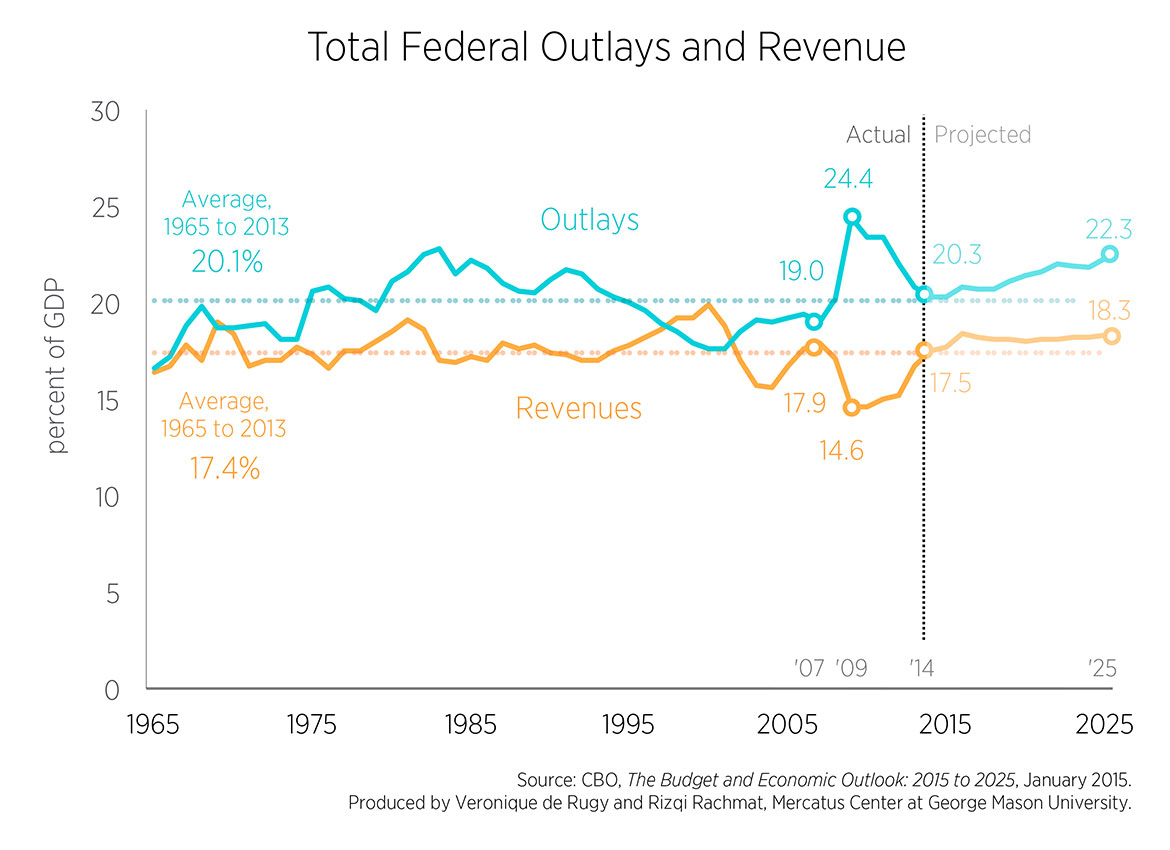
Mercatus' Veronica de Rugy, whose work I have  frequently cited over the life of the blog, has reminded us in her most recent piece the GOP-controlled Congress, despite Obama's tax-and-spend $4T budget, needs to combat the cost drivers behind over 70% of the budget (and climbing)--social security and government-sponsored healthcare.

In my Internet surfing and various emails, I've noticed a number of troubling things: this past December's consumer spending the weakest since 2009, a fifth straight month of factory order declines, increasing stock market volatility, we have central bank madness spreading all over the world:
So far this year, 17 central banks have instituted some form of easing. Among the notable central banks to cut rates were…
    Australia
    Canada
    China
    India
    Egypt
    Pakistan
    Peru
    Russia
    Turkey
Also, the European Central Bank began buying 60 billion euros of debt a month.
Moreover, we have a distinct deflationary whiff overseas with government banks, even blue chip corporations offering bonds at NEGATIVE interest rates:
Government bonds from Germany, Denmark, Netherlands, Austria, Sweden, Finland, France, Belgium, and Switzerland all sport negative yields. That's nine major sovereigns with negative yields. According to the Wall Street Journal, 16% of the global government bonds have negative yields. Short-term euro-denominated bonds from Swiss food company Nestlé have gone negative. That's a first for Nestlé, and it may be the first time in history the yield on a corporate bond maturing in more than one year has gone negative. You can now pay for the privilege of lending money to a good company.


The Last Bee Gee


Facebook Corner

(Reason). Requiring that people vaccinate their kids if they want taxpayers paying their bills should boost immunization rates without making the treatment worse than the disease.
I think that participants in a government-sponsored health plan should be required to do their part in mitigating the risk of getting or spreading a contagious disease.
I'm pro vaccine all the way - but I am not pro-using-the-tax-code-to-promote-behaviors-we-think-are-right , that's f*cked up
It's not just about you, but you spreading the disease to other people who, for instance, may not be able to be vaccinated.
 I keep thinking reason advocates individual choice. Then I see this nonsense.
 Your right to have a contagious disease stops when your disease is a threat to my own health.
This is the most profoundly idiotic debate I've ever seen my felllow libertarians engage in. You do NOT have the right to expose someone's new-born infant or an immunocompromised patient to the increased risk of acquiring a debilitating but completely preventable disease that can result in death or life-long disabilities. End of story.

We are living in an increasingly totalitarian state where the government spies on us, bombs the shit out of countries without Congressional authorization, and bails out favored businesses left and right. We also have an $18 trillion dollar debt. Taking a stand against vaccination needlessly endangers lives and is a political loser. What the holy F* are you idiots thinking? [OP]
The fact that sophistic anti-vaxxers have spammed this thread confirms that the OP is spot on. Read some real science, from peer-reviewed journals, not some "natural health" website trying to spin Big Pharma conspiracy theories or anecdotal horror stories of adverse events (AE), e.g., "We found evidence that some vaccines are associated with serious AEs; however, these events are extremely rare and must be weighed against the protective benefits that vaccines provide. Pediatrics 2014;134:1"

Musical Interlude: My Favorite Vocalists

Dusty Springfield, "I Only Want To Be With You"


Tuesday, February 3, 2015

Miscellany: 2/03/15

Quote of the Day
Leadership is the art of getting someone else 
to do something you want done 
because he wants to do it.
Dwight Eisenhower

Tweet of the Day
Warsaw's Blinking Lights


Nanny of the Month: January 2015


Facebook Corner

(Reason). The latest on the wedding cake beat.
This has nothing to do with getting a wedding cake; there are gay bakers, or at worst they could decorate a standard cake (e.g., there are gay wedding toppers on eBay, etc.) This has to do with using the State for punishing people who happen to hold a more traditional perspective., which has a chilling effect on the First Amendment.

There is no reason in the world why this bakery has to justify what products it sells, say if it specializes in traditional weddings. Do I have a right to file a complaint if the local department store doesn't carry big-and tall sizes or my office supply supercenter doesn't carry left-handed scissors? How does anyone have the right to demand a business to stock an item based on the aribitrary preferences of every crackpot troublemaking fascist entering my shop? I don't have to justify why I refuse to service a fascist jerk, with or without specified reason.


I would think that gay bakeries would be more than happy to take the business; if there are barriers to entry, the state should pursue that. But in almost every case I've seen, these troublemakers find an alternative source but they want to get their pound of flesh because someone doesn't agree with their point of view. It's unconscienable and anti-liberty at its core.
 I am a gay man. I hate and actively participate in boycotts against those who would discriminate against me and mine. 

but why on EARTH do we need the government to make someone bake us a cake? I can understand if it's critical medical services, if it's government services, or if it's something else which the state has taken control of... 

but really? we're going to force people at the barrel of a gun to take our money? WTF guys?
It is not for the State to undermine the voluntary transactions of the marketplace; I don't buy into the "public access" rationalization for Statist intervention; it's a violation of my economic liberty. If I choose to specialize in traditional wedding cakes, that's my decision to make. Now personally, even if I morally object to the gay lifestyle, I don't maximize my sales by arbitrarily turning away profitable transactions. If I turn away nontraditional cakes it's an opportunity for competitors.

I am not a fan of boycotts, which would discriminate against those acting based on their religious or moral convictions; is that any more moral than blacklists against hiring gays? I would rather see associations of vendors committed to accommodating diversity.

(Lawrence Reed). Some people claim that because Christ drove the "moneychangers" from the Temple, He was somehow and therefore opposed to wealth or even against banking. Not so. That's like saying that because a funeral is not the appropriate place to break out with "Happy Days are Here Again" on a kazoo, it's therefore never proper to play it anywhere. Whether you're a person of faith or of no faith, historical context and accuracy should be important to you:
 I think once again we have to think of the duality of the earthly kingdom with the heavenly kingdom. Jesus was not condemning commerce per se but the time and the place of these transactions. The Court of the Gentiles, where this marketplace had been set up, had been built as a place of evangelization and prayer. Instead of serving God, the temple had over time become a place of business where Jews complied with external signs of compliance with the Law, e.g., ritual animal sacrifice and paying the Temple tax, but the Jews in attendance demonstrated an empty, insincere kind of faith--;like the proud Pharisee, they complied with the external signs of faith or compliance with the Covenant, but they didn't live their faith and responsibilities in everyday life. The compromising of the Court of the Gentiles symbolized the corrupt faith being practiced by contemporary Jews: God was not fooled by empty compliance with Passover rituals, financially supporting the temple, attending Temple, etc. This extreme behavior on Jesus' part was a teaching moment; the Temple without genuine, heartfelt compliance with the Law was an empty shell no longer pleasing to God.

(Cato Institute). Don’t believe minimum wage hikes hurt real people? Read on....
Isn't it amazing how many busybody "progressive" people are willing to spend the money in someone else's wallet? The crony unions, of course, always want to manipulate the numbers of workers to sustain artificially high wages through labor protectionist policies (e.g., they also oppose immigration for similar reasons). Ever wonder why the big retailers typically support increasing the minimum wage--at the expense of the smaller mom-and-pop retailers like the bookstore in this post?
Ah, Mr Cato.... But if you're making $7.25 an hour, you may not be able to go to that bookstore....
Let's make the minimum wage $0/hour, to give low-experienced/skilled workers an improved opportunity to find gainful employment. at a rate that's nobody's business except the two parties coming to a voluntary agreement.
(separate comment)
And at $15/hour, nobody is able to go to that bookstore.

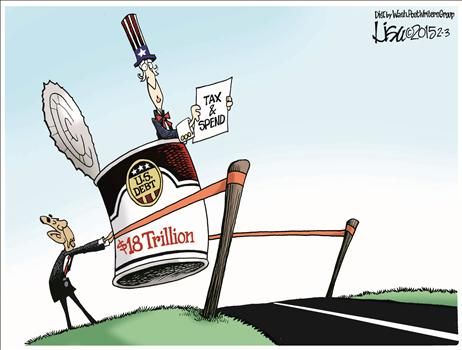
Political Cartoon

Courtesy of Lisa Benson via Townhall
Musical Interlude: My Favorite Vocalists

Joe Cocker, "When the Night Comes".  My favorite Cocker performance. This marks the end of my Joe Cocker retrospective. Next up: Dusty Springfield.

Monday, February 2, 2015

Miscellany: 2/02/15

Quote of the Day
The way of the world is to praise dead saints and persecute living ones.
Nathaniel Howe

Image of the Day

Via Rand Paul on Twitter


Tweet of the Day
Rand Paul and Chris Christie Step Into It: Anti-Vaccine 

I got clobbered with all the usual childhood diseases, no doubt caught from one of the contagious kids at school. I think the worst part of it was having to stay home while my younger siblings went out with my Dad to see the latest Disney flick at the theater; I didn't get a rain check. I understood, of course, it wouldn't be fair for other people at the theater to catch it from me, but I was missing out on an anticipated movie.

We shouldn't forget it was natural for this topic to come up given the recent measles' outbreak and one of then Gov. Rick Perry's fatal kerfuffles in the 2012 campaign involving the HPV vaccine mandate.  To a certain extent, I anticipated Rand Paul's reaction, given his dad's own similar tough stand against allegedly rogue vaccines and relevant attack of Perry by Ron Paul on similar groups. There are all sorts of issues: the nature and extent of vaccination, the seriousness of the illness, the intolerance, ineffectiveness or potential unintended, bad effects of the individual vaccine for particular children, the ability of the parent to diagnose and control for the illness through voluntary quarantines, etc. I don't want to oversimplify the issue. Aren't we trumping parental rights?  But the issue is whether the infected, unvaccinated child affects other children--especially those who cannot tolerate vaccines.

I don't feel the need to go beyond Walter Block's analysis of the issue; the contagious person, whether or not intentionally, is risking the other person's life or health. He's not going to hurt the vaccinated kids, but the risk is to the small number of children or others who haven't or cannot be vaccinated. (There have been pregnant women who have died from diseases with available vaccines.) This is a straightforward application of the non-aggression principle. In general, the victim's unalienale right to life and health outweighs your personal preferences.                                            

Choose Life: Beautiful Children With Down Syndrome

McDonald's Super Bowl ad featuring 8-year-old Grace Ramsburg
Via LifeSiteNews


Facebook Corner


This is one of those cases where you really need to see the quote in context. I classify myself as a libertarian-conservative in the context of the Old Right, which battled with FDR's fascialism and was non-interventionist. Rothbard looked at fusionists with all the suspicion that fellow AnCaps view minarchists--as a little bit pregnant with Statism. So Rothbard was really addressing the likes of William Buckley who would reluctantly agree that the War on Drugs is dysfunctional. In fact, most people outside of America don't view American conservatives as real conservatives because we are vested in the classical liberal tradition. Ironically Rothbard had his own form of fusionism: paleolibertarianism. http://mises.org/library/listen-yaf

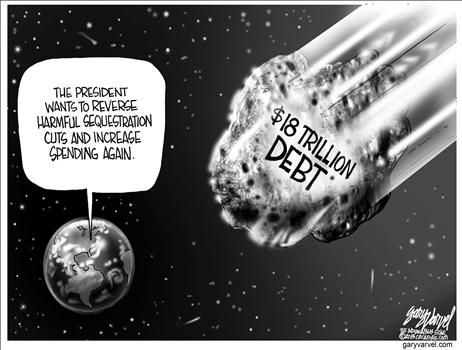
Political Cartoon

Courtesy of Gary Varvel via Townhall
Musical Interlude: My Favorite Vocalists

Joe Cocker (with Jennifer Warner), "Up Where We Belong"

Sunday, February 1, 2015

Miscellany: 2/01/15

Quote of the Day
One sees great things from the valley, only small things from the peak.
G. K. Chesterton


Earlier One-Off Post: Foroohar and Another Puff Piece on Cherokee Lizzie

Congratulations, Super Bowl 49 Champion New England Patriots!

Well, my folks and 4 of my younger siblings were born in Massachusetts, so I'm sure they are happy, I'm more of an NFC fan and was somewhat disappointed, but kudos to the Patriots for a fourth-quarter come-from-behind victory. The Seahawks gamely battled back; that tipped reception just shy of the goal line was awesome. I have to be one of those Monday morning quarterbacks who will second guess the play called leading to an interception in the teeth of the defense from the 1-yard line. I've got some running backs who can punch it in plus a scrambling quarterback who can rollout to either weak side and force the defense to commit, opening up a receiver. But I've never coached even a Pee Wee league team to victory....

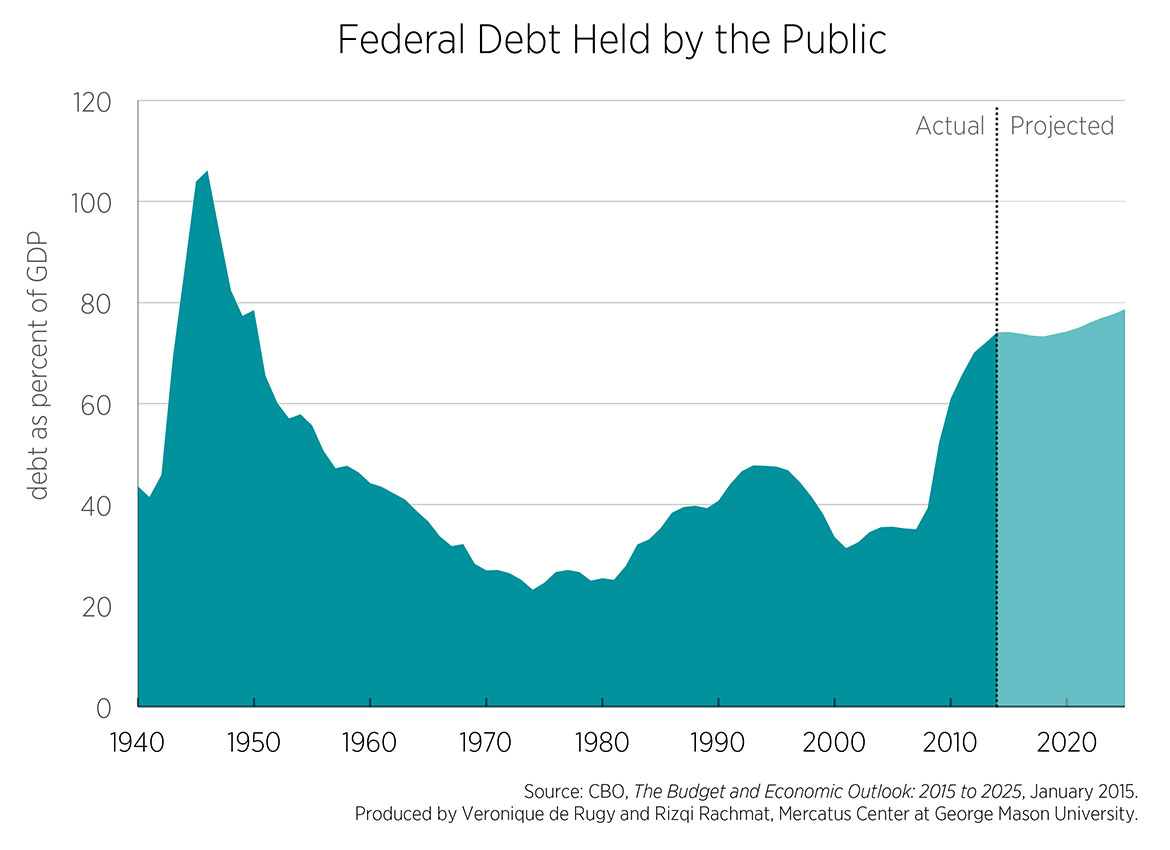
Chart of the Day: Death and Taxes


Image of the Day


Political Potpourri

I'm not really obsessed with 2016, but I'm watching Rand Paul carefully. He has a way of needling potential candidates/competitors like Hillary Clinton, Marco Rubio, Chris Christie, and most recently Jeb Bush, who has admitted smoking marijuana as a young adult but seems reluctant to take on the dysfunctional War on Drugs.

Drudge is reporting a Washpo piece on how Rand Paul, an opthamologist, was upset at the recognized board which requires ongoing recertification for newer surgeons but grandfathered older surgeons who had been issued lifetime certifications. Paul considered the double standard unconscionable and decided to create his own competitive board. It's not clear where the Post was going with it; I think it wants to question his own self-serving certification; let's first point out that he was certified under the old system, although I think he let his certification lapse a few years back. For whatever reason, time constraints, difficulties in winning recognition of his certification board, etc., Paul eventually let the organization fold.

It's difficult to know what's going on in the polls; I've seen Rand in the single-digits in a number of polls and double that in others. A recent Des Moines poll showed him finishing a close second to Walker, even though he didn't make an appearance at a recent summit where Walker won rave reviews.

Lindsey Graham (R-SC) and John McCain are so alarmed at Rand Paul's maverick foreign policy that Graham  is considering his anyone-not-Rand candidacy, but let's point out neocon positions in the GOP are more the rule than the exception. It isn't even clear he can win as a favorite son candidate in his own home state. However, Paul seems to be at the back of the pack in the latest poll I saw, about 7%.

Gov. Snyder (R-MI) has made a self-serving comment how the next President should have gubernatorial experience. I have my own issues with Snyder, including the anti-Tesla vote and a spendthrift GOP legislature. I understand how Obama, without executive experience, has undermined a senator as President, but I think some recent former governors have had their own issues, e.g., nationbuilding, spending, deficits

I'm still seeing an odd pattern of Obama's job approval; Gallup and Rasmussen have it around 50, and others around the mid-40's and net disapproval. A aimilar story about the Hillary Clinton pairwise polls; Fox News is showing Rand Paul and others within 5 points, while other sources have her in the double-digits.                                                                  

Facebook Corner

(FEE). Search your conscience. Consider the evidence. Be mindful of facts. And ask yourself: “When it comes to helping the poor, would Christ prefer that you give your money freely to the Salvation Army or at gunpoint to the welfare department? -- From the latest installment in the weekly "Clichés of Progressivism series at FEE.org:
The piece is spot on. There is no virtue in coveting a neighbor's goods--or rationalizing its theft by others, including the State; envy is a vice, not a virtue. Jesus repeatedly distanced Himself from the authorities, rejecting any claims to an earthly kingdom or being seen as an insurrectionist. Never forget--He considered the greatest commandment was to love God, not your neighbor. His issue with wealth was in the rich man's obsession with it to the point of crowding God out of one's life. But, in fact, He had wealthy followers, and in one telling anecdote, He rebuked His disciples at Bethany for complaining about a woman anointing Him with expensive perfume and not instead selling the perfume and giving the proceeds to the poor; there is also the parable of the proud Pharisee and the tax collector--He was not impressed by people bragging about their charity and righteous deeds while contemptuously judging others. [Note to readers: I had seen an earlier post of this article and have been working on a relevant one-off post over the weekend; I will likely expand on the above comments in that post which I expect to publish later this week.]

(Lawrence Reed). "Books won't stay banned. They won't burn. Ideas won't go to jail. In the long run of history, the censor and the inquisitor have always lost. The only sure weapon against bad ideas is better ideas" -- Yale University president and historian Alfred Whitney Griswold (1906-1963), who also wrote, "Could Hamlet have been written by a committee, or the Mona Lisa painted by a club? Could the New Testament have been composed as a conference report? Creative ideas do not spring from groups. They spring from individuals."
Ah, but what would the populist "progressives" say? I can just imagine Elizabeth Warren arguing with William Shakespeare that "You didn't write that... Who taught you to read? Who inspired you to write"?
(separate comment)
However, it raises a serious question: recall the burnings of the library of Alexandria and recent reports of ISIS in Iraq purging libraries of non-Islamic materials. We can't regenerate rare manuscripts which are not yet in the public domain.

(National Review). The Duke porn actress tries her hand at political philosophy.
Actually, Williamson seems to be confounding libertines, like the Duke student, with libertarians. Libertines tend to be libertarian, but not all libertarians are libertines. Paleolibertians maintain culturally conservative values, even though they tolerate certain morally questionable behavior of others. Walter Block has a good essay on the distinction here: http://mises.org/sites/default/files/11_1_7_0.pdf
When boil it all down, all libertarianism is is pro-drugs, pro-porn, pro- prostitution.
 No, you are confusing tolerance for dubious behavior, even if you personally oppose them, with acceptance. Not all libertarians are libertines.

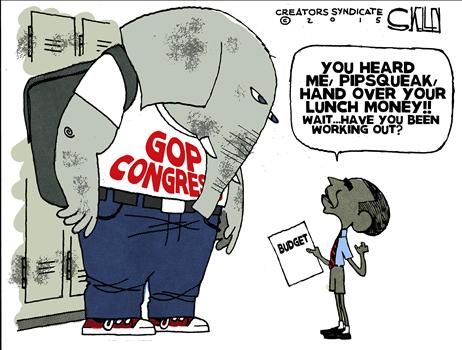
Political Cartoon

Courtesy of Steve Kelley via Townhall
Musical Interlude: My Favorite Vocalists

Joe Cocker, "You Are So Beautiful"

Foroohar and Another Puff Piece on Cherokee Lizzie

Familiar readers know that I have on a handful of occasions written one-off posts off Time Magazine's "progressive" columnist pieces; in part, this is driven by a compensatory print subscription when my long-term print subscription to US News & World Report ceased. (US News still publishes in a digital format.) It's not like I need to look for "progressive" pieces to disagree with; I could spend 24 hours a day of nonstop blogging refuting garbage on the Internet and barely touch it. I think what annoys me about the Time pieces is that they have wide readership and the editors don't even attempt to push for more balance.

I'm not arguing for censorship, but for me it's a matter of professional integrity. I served early daily mass as an altar boy at the local AFB during high school, and when I graduated at 16, the chaplain gave me his multi-volume set of Aquinas' Summa Theologica. Aquinas had a way of posing issues and exhaustively listing the pros and cons in deciding the issue. (I loved it when I could anticipate Aquinas' response to a compelling objection.) You will see an analogous approach in my parsing one-offs, say, Meet the Press transcripts or segments of my ongoing review of Obama's SOTU address; I'll sometimes republish exchanges in certain Facebook groups. (I don't repeat most of the flaming responses. For example, I recently expressed my position against forced recognition of "gay marriage" on conservative and libertarian grounds, and one irate female "progressive", intolerant of my audacity to hold a politically incorrect opinion, wished that "old dinosaurs" like me would hurry up and die.)

Normally I would cite the original Rana Faroohar piece from Time, but for some reason (and I don't recall this being an issue with past cited columns) I wasn't able to pull it up through a search engine, at least at the time I'm writing this post. I did find a half-dozen or more references to the column. Let me provide this information for the motivated reader: the piece is titled "Tilting at Hillary" and it appears on page 28 of the Jan. 26, 2015 issue.

Let me be clear at the outset: I LOATHE populism in all forms, right-wing or left-wing. In today's economy, left-wing populism is often characterized by attacks on the "banksters", the top 1%, and alleged nefarious big businesses buying the US government courtesy of the SCOTUS Citizens United decision. And the high priestess of the left-wing populist movement is Sen. Elizabeth Warren (D-MA). [My tongue-in-cheek name, "Cherokee Lizzie", reflects the fact that she classified herself as a Cherokee on some HR paperwork, because of some ancestor Cherokee in her family tree. My Mom once told me I inherited my cheekbones from a great-grandmother Cherokee on my Dad's side of the family, but I classify myself as Franco-American (French-Canadian descent) and plain "Caucasian" on HR paperwork. I personally think the EEOC is an anachronism.]

There are a few intellectually dishonest talking points in the column, motivating this one off. Let's start with Warren's attack "railing against the fact that lobbyists from Citibank and othe big banks had been allowed to squeeze a rider into the latest congressional budget bill that would make it easier for federally insured banks to keep trading derivatives, which Warren Buffett once described as the "financial weapons of mass destruction" that sparked the 2008 crisis".

Let us start by noting Buffett discussed a number of characteristics to derivatives which he has controlled for in his own subsequent derivatives business through Berkshire Hathaway:
In the first nine months of 2013, Berkshire Hathaway Inc. made derivative gains of $1,361M, according to its earnings release. That may be minuscule in the context of its operating earnings of $11,363M in the same period, but is certainly not to be sneezed at. Berkshire Hathaway Inc. enjoyed an average annual float of $6B from the derivatives trade. It would have paid $10.5B had it borrowed the same amount in 2004 at an average annual interest rate of 5% for a 15-year maturity. Instead, it has only paid up about $3B in losses on these positions so far, and according to the author, no further payments are likely until 2019. Berkshire Hathaway Inc. therefore will likely make out with a $7.5B surplus.
I may return to this point in more detail, because Warren tries elsewhere to blame "laissez faire" for the 2008 crisis, but Reisman makes an overwhelming, convincing case that the status quo was the result of massive failures of  government monetary and fiscal policy. The companies that failed were not big commercial banks or integrated financial services (re: the Glass-Steagall red herring). Companies that failed included the GSE's, AIG, and some investment banks which were not playing dice with government-insured funds.

But let's go to Warren's shameless demagoguery about the rider. This bipartisan-supported rider was a reform to a push-out rule that former Sen. Lincoln (D-AR) created isolating derivatives away from federally-insured deposits. The problem is that you throw out the baby with the bathwater. Derivatives in essence are like insurance. If banks are writing loans, say, for shale oil infrastructure, they may very well want to insure against a steep price drop in crude oil. The derivative hence serves to mitigate, not compound bank risk. But under the Lincoln rule, banks couldn't hedge against their loan portfolios. This was not some shady backroom political deal; in fact, Barney Frank, as in Dodd-Frank, supported the Hultgren-Himes reform before his retirement from Congress. Whereas Citigroup did help write language for the reform YEARS EARLIER (the reform got sidetracked over JP Morgan's "London Whale" loss), the measure was supported by energy companies and mid-size banks. (Let's also point out that big banks can work around the push-out rule through their European subsidiaries.) The point is that Foroohar should have done due diligence on the rider instead of accepting leftist talking points at face value.

Most of the piece is oriented more at a rift between the populists and the allegedy financial deregulation happy wing of the Democratic Party, which she traces back to Carter-era Fed Reserve Chief Volcker's "deregulation" of interest rates through the Wall Street-friendly, financial industry deregulating Clinton-era economists who finally did away Glass-Steagall in conjunction with the GOP-led Congress. Warren considers the latter trickle-down, "laissez faire" Democrats responsible for our "current wage stagnation" and responsible for having "exacerbated the staggering gap between rich and the poor": [Warren says] "I'd lay it right at the feet of trickle-down economics, yes. We've tried that experiment for 35 years, and it hasn't worked."

Courtesy of Zero Hedge
Now really, quoting Shakespeare, a plague on both their houses, but I have to comment on Warren's delusional analysis. The Federal Reserve had already done a weak job defending the dollar, which had been remarkably stable since the birth of the republic through the creation of the Fed (there were final fluctuations of inflation and deflation but remarkably stable over the long run). Even with a loosely-convertible dollar through end of Bretton Woods (a fixed-rate exchange to the dollar, which remained tethered to gold). The market began to lose faith in the dollar because of Vietnam War and Great Society pressures exacerbating the federal deficit, inspiring redemptions of fiat currency. Nixon's closure of the gold window untethered the dollar from any discipline from the Fed
to protect the currency's stability. [Since 1971, the dollar has lost over 80% of its purchasing power.] In fact, the Fed had every incentive to maintain easy money policies to accommodate the Fed's controversial second politically-motivated mandate of full employment. Keynesians of the period believed in the Phillips curve, describing a tradeoff between unemployment and inflation. i.e., high unemployment shouldn't coincide with high inflation. (Monetarist Milton Friedman famously argued this tradeoff is not true in the long run.) The Fed tried to finesse rate increases to control for inflation; strong rate increases were politically unacceptable, because of fears of triggering a recession. Volcker initially started out as a Fed governor favoring a gradualist approach but eventually became convinced that it wasn't working--in fact, the country was experiencing stagflation--high inflation and rising unemployment. Volcker began championing stronger medicine (bigger rate increases) to break the back of inflation, very much a minority position on the Fed. When Carter moved Fed Reserve chair Miller to head Treasury (Blumenthal was part of an administration purge), Volcker was unexpectedly named to succeed Miller. (In fact, Carter wasn't familiar with Volcker but had pursued David Rockefeller; Rockefeller, a Republican, was convinced his famous surname would serve as a lightning rod if and when he had to recommend tough medicine and instead recommended Volcker.)

Recall that Volcker was named in August 1979 and inflation peaked on Reagan's watch, along with Volcker's 20% federal funds rate; farmers and construction workers were leading protests against the Fed. But here's the point: the Fed is anything but the free market. It is true that Treasury notes are traded in the market, but these transactions reflect expectations of monetary and fiscal policies, which are State-based, not free market. It's not clear what Warren is referring to here, unless she is trying to argue for government-imposed wage/price controls straight from the FDR era. We already know the results of these economically illiterate policies: surpluses (e.g., the minimum wage and the unemployed) when the market-clearing price is below the statutory minimum, and shortages when the market-clearing price is above the maximum price (consider, say, ice cubes during an extended power outage and dysfunctional price gauging laws).

Now I'm not going to going to review the history of banking here, but arguing that US banks are, or ever have been, free market is a laughable state of denial. From Selgin:
U.S. experience does not demonstrate the failure of unregulated banking, for the simple reason that banks have been heavily regulated throughout American history. As Bray Hammond notes (1957, 186), legislators in the early years of the republic never applied the principle of laissez faire to the banking business. “The issue was between prohibition and state control, with no thought of free enterprise.” Banks were outlawed except when specifically authorized by state legislatures, and permission to set up a bank was usually accompanied by numerous restrictions, including especially required loans to the state. The situation after 1837—when the charter of the Second Bank of the United States expired—has been aptly referred to as involving “decentralism without freedom”;20 many note-issuing banks were established, but all were subjected to inhibiting regulations by the State governments that chartered them, and entry into the business was tightly restricted. Many western states and territories, including Wisconsin, Iowa, Oregon, Arkansas, and Texas, for a time allowed no note-issuing banks whatsoever. Other states restricted the business to a single, privileged firm. In most places branching was also outlawed.
Here is a useful comparison/contrast involving US banking:
The U.S. banking environment is very unique when compared to systems in Canada and most other countries. Some of the factors which make the U.S. banking environment unique are:
    Large number of depository financial institutions;
    Lack of nationwide branching;
    Significant usage of checks and mail-based payments;
    Restrictions on corporate checking accounts;
    Unbundled pricing of banking services;
    Arms-length relationships between banks and customers; and
    Involvement of a central bank (the Federal Reserve) in the processing of payments.
Among other things, when you review nineteenth century banking, branch banks in farm states would have allowed more geographical and economic diversification, better able to handle banks' ability to weather seasonal money supply constraints, e.g., harvest. [Note that local banks in farm states did not want big bank competition for obvious reasons.] In addition, there were often collateralization issues for issuance of banknotes, like a mandate of Treasury notes, at the same time the US government was looking to pay down its debt. In contrast, as I've pointed out in past posts, Canada has had a more stable system allowing branch banking and more flexible collateralization for issurance of banknotes. The following chart comes from the same cited source:

Key Area United States Canada
Number of Banks Over 8,500 Approx. 70
Nationwide Branching Effectively Limited to Regions Full Nationwide
Interest Paid on Corporate Checking Accounts NO YES
Foreign Currency Accounts NO YES
Number of Bank Relationships per Company Many One
Check Usage Very High Medium
Check Clearing Times 1-3 Days Same Day
Check Conversion Initiatives YES NO – Not Needed
Government Operation of Clearing System Very High Low
“Unbundling of Banking Services” YES YES

Kam Chu compares the "unregulated" (Hong Kong), "regulated/no deposit insurance" (Canada) and US banking systems between 1935 and 1964 here: a period which saw several US bank failures but no Canadian or Hong Kong failures. I'm not arguing solvency is the only criterion for judging bank systems, but it is clear that the problems of US banking are fairly unique and directly attributable to bad government policy, including a morally hazardous deposit insurance scheme, which basically encourages more risky loan activity, transferring risk to the taxpayer.

Now as to financial modernization: the American banks were trying to compete against large foreign-based banks which were not subject to the same regulatory constraints and had a global competitive advantage. Glass-Steagall had basically been modified over the years before the financial modernization act was signed into law. AIG was not a bank; it had been writing swaps without sufficient loss reserves/hedges. Not to mention we had the Fed effectively doing bailouts of certain institutions under dubious authority; the likelihood of a Fed or taxpayer rescue  basically serves to encourage risk-taking behavior. Almost all libertarians, including myself, oppose bailouts, deposit insurance, etc.

Courtesy of Political Calculations
As far as the income-inequality kerfuffle, if you look at the Gini coefficient (recall 0 is perfect equality, 1 is perfect inequality), you see it start to rise among individuals in the post-WII era, absent from wartime wage constraints where more productive employees saw the benefit of a more competitive marketplace. However, it's been relatively flat since 1960, which suggests that the theory of expanding inequality is largely a myth. (There are all sorts of data issues, e.g., whether redistributed income/benefits are factored in lower income, plus the data come from different agencies and some observed changes reflect changes in methodology.) Many of the studies that Foroohar references are not longitudinal reflecting social mobility and transitions between income levels. My own income has been volatile; I did much better during the late 1990's and I struggled after my academic career ended in an early 1990's recession. For many people, they may have a short-lived period at the top--say, they get a large inheritance, cash in some stock options, sell some valuable asset like a house, a business goes public (on the stock exchange), etc. That income is not sustainable. Some professional athletes retire from 7-figure incomes,

I don't have an issue of others being economically successful; I personally find the Politics of Envy that Warren and Forhoohar espouse morally reprehensible.

Now there's no doubt some people have done better than others during the Obama era--in part, this has to do with Fed easy money policy which has manifested itself in ways like increased stock prices, with many of those assets held by higher-income individuals. But Foroohar ignores the fact that for the most part we've had subpar economic growth, and Congress had greatly added to business and hiring costs with unnecessary, costly regulations. Foroohar also ignores that while we've been slipping on economic freedom scales, economic liberalization has created millions of middle class jobs for Chinese and Indian workers. Our problem is not that the government needs to do more; the government needs to do far less.

As for Warren's pejorative description of free markets "haven't worked" for 35 years:  there hasn't been a free market for 35 years. we need to get the government out of the way of the free market. Too many taxes and regulation, too much regime uncertainty inhibits economic growth. You don't grow investments by taxing or regulating them. A sustainable 3% growth economy is possible and will lift all boats as workers become scarcer. All punitive taxes do is to shrink the tax base.

It's rather humorous to hear Foroohar call for Warren to push Clinton further left than Clinton already is. Be careful of what you wish for: Hillary Clinton is no centrist or conservative. Only about 20% of voters call themselves "progressive". Krauthammer recently hailed any attempt to get Elizabeth Warren the Democratic nomination; he considers it the one sure way to get a Republican back in the White House.